
ABUJA, Nigeria / NAIROBI, Kenya, Apr 22 2026 (IPS) - In many countries across Africa, people have recently lined up to vote. But in country after country, there has been no real choice on offer. As CIVICUS’s 2026 State of Civil Society Report documents, what has frequently been on display is a procedural ceremony of democracy, orderly enough to satisfy observers, but hollow enough to leave those who hold the reins of power untroubled. Laws and structures that were supposed to promote democratic decisions have been manipulated into compliance checks, ticking all procedural requirements while lacking democratic substance. In too many cases, the ballot box has become a public relations exercise.
Tanzania offered a stark illustration. Once seen as one of the continent’s rising democratic hopes, it held one of the most deeply flawed recent elections. Ahead of the October 2025 vote, President Samia Suluhu Hassan disqualified and detained most opposition figures and imposed a nationwide internet blackout. When people protested, they were severely repressed. Security forces fired live ammunition, killing over 700 protesters, and arrested thousands. Around 240 people, including children, have since been charged with criminal conspiracy and treason.
Uganda’s President Yoweri Museveni, in power since 1986, followed the same script: the 2026 presidential election as marked by widespread rigging, suppression of the opposition, internet outages and a lethal crackdown on protests. These shows of force were also an admission of weakness: governments with genuine popular support do not need them to stay in office.
In Kenya, election outcomes have increasingly shifted from the ballot box to the courtroom and the streets. While legal challenges and judicial oversight can be signs of a healthy democracy, there’s been growing normalisation of post-election uncertainty about whether results will be respected, with the state framing any challenge to outcomes as a threat to national security and stability, and responding to post-election protests with violence.
Further north, Tunisia exemplifies the slow-motion dismantling of a once-promising democracy. Its 2024 presidential election saw the incumbent face only token opposition. President Kais Saied has systematically removed democratic checks and balances, jailed opponents and vilified critics as agents of foreign powers. The country that once kept the democratic promise alive in North Africa has become a cautionary example of how quickly gains can be reversed.
In West Africa, military rule is being normalised. Burkina Faso, Mali and Niger are now led by military juntas, while in Guinea a carefully stage-managed December 2025 election enabled the military leader to retain power with a varnish of legitimacy. Elections in Côte d’Ivoire in 2025 and Togo in 2024 fell far short of competitive standards.
Senegal offered a rare exception: when President Macky Sall attempted to postpone the 2024 presidential election just days before voting, widespread protests and sustained international pressure forced the polls to proceed. Opposition candidate Bassirou Diomaye Faye, released from jail only days before the vote, won a shock victory — proof that electoral integrity remains worth fighting for.
In Central Africa, military rulers have simply changed into civilian clothes. General Oligui Nguema, who ended the 56-year Bongo family dynasty in a 2023 coup, retained power in an April 2025 election marked by the absence of a credible opposition and the abuse of state resources, making the outcome a foregone conclusion. Chad’s Mahamat Déby followed the same path, transitioning from military council head to elected president through a vote held under severe civic space restrictions and minimal competition.
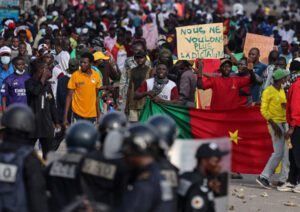
In October 2025, Cameroon’s Paul Biya, at 92 the world’s oldest head of state, extended his 42-year rule through a highly performative election. In both the Central African Republic and the Democratic Republic of the Congo, recent elections have been undermined by the state’s inability to control its territory amid ongoing conflicts, disenfranchising vast majorities and producing winners whose legitimacy is in permanent doubt.
Southern Africa offers a more encouraging picture. South Africa’s 2024 election ended almost three decades of unchallenged African National Congress dominance, with new political parties reshaping the landscape and forcing the formation of a coalition government. Elections in Botswana, Malawi and Namibia were competitive, with power changing hands for the first time since independence in Botswana. These results are a reminder that elections can still serve their democratic purpose.
The pattern across most of the continent is unmistakable. As civic space comes under intensifying attack, Africa’s citizens, institutions and international partners must resist the temptation to confuse orderly processes with democratic substance. Elections must offer genuine opportunities for accountability and be allowed to produce results that disrupt established power, if that is what voters want. Anything less risks normalising the appearance of democracy while hollowing out its content.
Chibuzor Nwabueze is the Programme and Network Coordinator of the Digital Democracy Initiative at CIVICUS.
Mighulo Masaka is the Project Officer, Host Liaison of the Digital Democracy Initiative, working closely with civil society in the global south for election-related activities.