
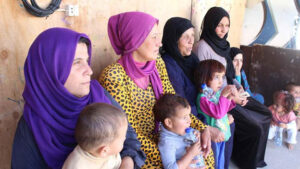
CAIRO, Egypt, Apr 23 2026 (IPS) - Six weeks into the 2026 Middle East military escalation, UNFPA Arab States Regional Office warns that its impact on 161 million women and girls living in conflict-affected areas across the region remain largely invisible in conflict analysis, humanitarian response, and funding priorities.
A new Call to Action, Regional Analysis of the Socio-Economic Impact of the 2026 Middle East Conflict on Women and Girls published by UNFPA, the UN sexual and reproductive health agency, highlights that current response mechanisms remain overwhelmingly gender-blind, treating gender-based violence (GBV) and maternal health as secondary concerns rather than life-saving priorities.
“The omission is not merely analytical – it is structural,” the report states. Without sex-disaggregated data and gender perspectives, the international community is conducting incomplete risk assessments, misaligning interventions, and missing critical opportunities for stabilization and peace.
The conflict is projected to cost regional economies $120–194 billion – equivalent to 3.7 to 6 percent of collective GDP. Four million additional people are estimated to be pushed into poverty and 3.64 million jobs may be lost. Women – overrepresented in informal employment – face disproportionate livelihood collapse while shouldering increased unpaid care work.
Supply chain shocks through the Strait of Hormuz threaten to delay lifesaving humanitarian supplies by up to six months. Across Gaza, Lebanon, Sudan, and Yemen, more than 260 health facilities and 14 mobile medical units have already shut down. Food insecurity is intensifying, with documented patterns showing women and girls eat last and least.
The report also highlights a surge in GBV risks driven by hyper-displacement, while sanctions and financial “de-risking” are crippling the ability of women-led organizations to deliver essential services. These organizations—often the first responders in crises—are being cut off from the very funding streams meant to sustain them.
UNFPA is calling on national governments, UN agencies, donors, and civil society to:
● Integrate gender systematically into all conflict analysis and response frameworks.● Protect and fund GBV and sexual and reproductive health services as core, lifesaving interventions.
● Finance and empower local women-led organizations, removing barriers to their access and participation.
● Ensure women’s leadership in recovery, peacebuilding, and decision-making processes.
“Making women and girls visible is not optional,” the report concludes. “It is fundamental to effective humanitarian action, sustainable recovery, and lasting peace.”
UNFPA is the United Nations sexual and reproductive health agency.
IPS UN Bureau