
BONN, Jun 12 2026 (IPS) - Africa contributes the least to global greenhouse gas emissions, yet it faces some of the world’s most severe climate-related health impacts. Several realities define the continent’s climate and health landscape – increased infectious diseases, air pollution, death, disruption and pressure on health systems through heatwaves, floods, droughts and storms.
Changing temperatures and, more significantly, rainfall patterns are expanding the geographical range and transmission dynamics of climate-sensitive diseases such as Malaria, Dengue fever, Cholera and other vector- and water-borne diseases.
Climate-induced droughts, floods, and changing rainfall patterns are reducing agricultural productivity and threatening food systems. This increases hunger, undernutrition, stunting among children, and vulnerability to disease. According to archive.uneca.org, malnutrition remains one of the largest climate-sensitive health risks across Africa.
Thus, as African climate negotiators intensify preparations for the 64th sessions of the UNFCCC Subsidiary Bodies (SB64), a clear message is emerging from Bonn: climate action without health action is no longer an option.
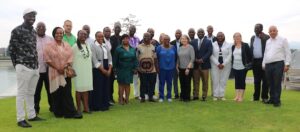
Over two critical days of engagement, African negotiators, health experts, technical institutions, and young climate leaders came together to strengthen Africa’s negotiating positions and place health firmly at the centre of the continent’s climate agenda.
The Climate and Health Capacity Building Workshop supported by the International Institute for Sustainable Development (IISD), and the African Group of Negotiators (AGN) Lead Coordinators Meeting collectively noted the growing recognition that climate change is not only an environmental challenge but also one of Africa’s most pressing public health threats.
For AGN Chair, Nana Dr Antwi-Boasiako Amoah, the connection is clear, and the required measures are equally urgent.
“Health is the human face of the climate crisis,” he told negotiators and partners during the opening of the capacity building workshop in Bonn. “If climate negotiations are ultimately about protecting people, then health must remain at the centre of our efforts.”
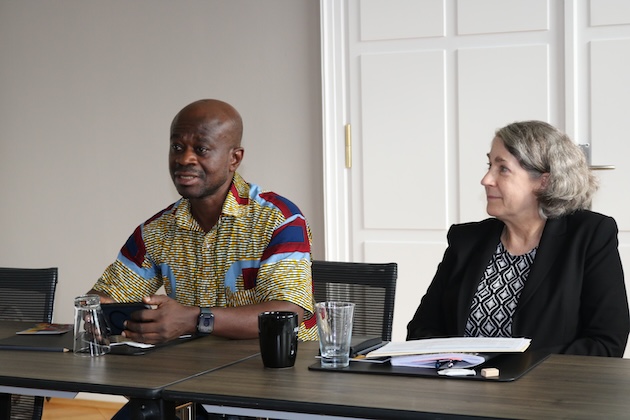
Chair of AGN, Nana Dr Antwi-Boasiako Amoah, with Dr Lynn Wagner of IISD at the Climate and Health Capacity Building Workshop. Credit: Friday Phiri
Building a Stronger African Climate and Health Voice
Building on the launch of the first-ever African Negotiators Climate and Health Curriculum in 2025, by Amref Health Africa, the climate and health capacity-building workshop brought together representatives from WHO-AFRO, Africa CDC, Amref Health Africa, the International Institute for Sustainable Development (IISD), technical experts, and young negotiators to deepen understanding of climate-health linkages and identify strategic entry points across negotiation tracks.
Participants examined ways to strengthen Africa’s position on adaptation indicators, climate-resilient health systems, early warning systems, health infrastructure, preparedness for climate-related emergencies, and financing mechanisms that can support health adaptation efforts.
“Following the adoption of the Belém Adaptation indicators and the ongoing discussions under the Baku Adaptation Roadmap, Africa has a unique opportunity to shape how adaptation is measured, financed and implemented globally,” said the AGN Chair. “We must ensure that health indicators under the global goal on adaptation are meaningful, context-specific, and responsive to Africa’s realities. We must also continue pushing for adaptation finance that enables African countries to build climate-resilient health systems, strengthen early warning systems, protect health infrastructure, and enhance preparedness for climate-related health emergencies.”
The emphasis on institutional coordination reflected a growing understanding that advancing Africa’s climate and health agenda will require sustained collaboration between negotiators, public health institutions, technical partners, and civil society.
And the WHO-Africa Regional Team Lead on Climate Change, Health and Environment pledged coordinated stakeholder support for the climate and health agenda.
“At the WHO-Regional office, we have developed Africa-specific policy and implementation frameworks in support of an Africa-wide coordinated climate and health agenda. Together with the Africa CDC and Amref Health Africa, we have offered and continue to provide technical support for the continent’s climate and health agenda. As we head to the African COP next year, we pledge continued support to the AGN, as Africa’s voice in climate negotiations, to ensure that climate and health are not left behind.”
Meanwhile, IISD Senior Director for Tracking Progress Programme, Lynn Wagner, noted the need for coordinated climate action, pointing out that “isolated action is no longer tenable as the global community faces multiple and interconnected environmental and sustainable development crises.”
IISD has been supporting the Friends of Climate and Health initiative aimed at fostering international collaboration on climate change and health.
Unity and Coordination Ahead of Critical Negotiations
While health featured prominently in discussions, the AGN Lead Coordinators’ Meeting reinforced a broader strategic priority; maintaining a unified African voice theme across all negotiating streams.
Convening lead coordinators for the various thematic streams, the meeting focused on aligning positions ahead of what is expected to be a pivotal negotiating session, ahead of COP31 in November and, ultimately, COP32 next year.
Drawing on priorities established during the AGN Strategy Meeting in Accra earlier in March this year, lead coordinators reviewed progress in implementing elements of the African Common Platform and assessed emerging issues across the negotiation tracks.
The AGN Chair called for discipline, commitment, and coordinated action.
“Our strength lies in our unity and our ability to speak with one voice,” he said, reminding negotiators that Africa’s influence in the negotiations depends on collective preparation and strategic coordination.
The discussions intensified the interconnected nature of many agenda items. Climate finance remains Africa’s foremost priority, but increasingly, negotiators are recognising how finance decisions affect the various thematic outcomes, particularly, adaptation, which has been Africa’s main agenda over the years.
Health, Finance and the Road to COP32
A recurring theme across both meetings was the need to translate recognition of climate-related health risks into tangible climate finance support for African countries.
Negotiators emphasised the importance of securing adaptation finance that enables countries to build climate-resilient health systems, strengthen disease surveillance and early warning systems, protect health infrastructure, and improve preparedness for climate-related emergencies, as espoused in the Belem Climate and Health Action Plan launched at COP30.
“Health is already recognised within the investment frameworks and result areas of major climate finance mechanisms, such as the Green Climate Fund (GCF) and the Fund for Responding to Loss and Damage (FRLD),” said David Kaluba, a Climate Finance Lead Negotiator. “However, the challenge is not only the availability of financing windows, but the limited pipeline of country-driven health-focused proposals and investment demand. Most countries have yet to fully integrate health priorities into their national climate plans (NDCs), financing strategies, and project pipelines, resulting in significant underutilisation of available climate finance opportunities for health system resilience, adaptation, and loss and damage responses.”
Kaluba therefore notes the need to generate sufficient country-level demand through evidence generation, development of bankable climate and health investment pipelines, and strengthening of institutional capacity to access and absorb available financing.
A Defining Opportunity for Africa
For many participants, this work extends beyond SB64. It forms part of a broader trajectory towards COP31 and ultimately COP32, significantly viewed as more than a diplomatic milestone.
It represents an opportunity for the continent to shape the global climate agenda around African realities and priorities, including climate and health.
As negotiations intensify, African countries are seeking to ensure that climate action delivers meaningful benefits for people on the ground, and health offers a powerful lens through which to frame that ambition.
Therefore, as formal negotiations begin on 8th June, one message is clear: protecting the climate ultimately means protecting human health. And for Africa, this principle is becoming an increasingly powerful driver of its engagement in the global climate process.
The author is the Climate Change and Health Advocacy Lead at Amref Health Africa.
IPS UN Bureau Report