

BULAWAYO, Zimbabwe, Jul 22 2026 (IPS) - In September 2024, an outbreak of Marburg virus disease in South Ethiopia was confirmed, contained, and declared over within three months.
In 2023, Tanzania contained a haemorrhagic fever outbreak that could have easily become a pandemic in a record 90 days. It is no accident that disease outbreaks now happen briskly rather than as a full-blown crisis.
Thanks to a steady, Africa-wide public rollout of laboratories, surveillance networks, trained epidemiologists, and emergency operations centres, the next pandemic could test Africa’s health preparedness.
According to the 2026 Africa Health Security (AHS) Index – an independent, public-sourced assessment of epidemic and pandemic preparedness – African countries are improving their ability to detect and prevent health threats. An overwhelming majority of countries – 52 out of 54 – and five of six categories have shown improvement since the last assessment in 2021.
The AHS Index, which builds on the inaugural Global Health Security Index, has been developed specifically for Africa. It assesses pandemic preparedness in terms of prevention, detection and reporting; rapid response; health systems capacity; commitment to international norms; and risk environment.
“The measurable increase in capacity is the result of dedication, hard work, and investment in the health security of Africa over recent years, but much more is needed. Substantial gaps remain that can mean the difference between a small outbreak and an international pandemic. Investments made today will determine Africa’s capacity to address the health threats of tomorrow,” said Dr Wilmot James, senior adviser to the Brown University Pandemic Center and a former member of Parliament and shadow minister of health in South Africa.
“Recent declines in overseas development assistance underline the need for governments to prioritise resources and strengthen the systems that address health emergencies.”
Ready But Not Steady
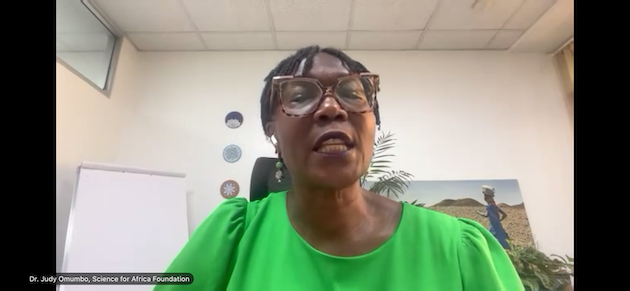
Judy Omumbo, Head of Partnerships and Resource Mobilisation at the Science for Africa Foundation. Credit: Busani Bafana/IPS
Judy Omumbo, Head of Partnerships & Resource Mobilisation, Science for Africa Foundation, emphasising that we can only manage what we measure, said that until now there has been no single tool to measure preparedness consistently across every country in Africa using verifiable data.
“The data show real, broad-based progress across this continent, but they also show, unambiguously, that no country is yet adequately prepared for the kind of emerging threat landscape that it faces,” said Omumbo, an epidemiologist.
Developed by the Brown University Pandemic Center, the AHS Index shows that progress made is not sufficient to buttress the continent against future pandemics, health experts observed.
Hayley Severance, Deputy Vice President of Global Biological Policy and Programs at the Nuclear Threat Initiative, a global security non-profit based in the US, said Africa has improved its pandemic preparedness by 30 percent but growing risks could trigger a backslide.
“Progress has been made, and we have risen to 41.5 out of 100, but we are still not prepared,” Severance said at a press briefing ahead of the index launch, which measures countries’ capacity to detect and respond to emerging infections.
“More investment and more political will need to be put toward pandemic preparedness to get us closer to that 100 average score across the continent.”
While the index scores indicate real progress in prevention, detection and response to pandemics, scant gains, funding gaps, political insecurity and climate change risk blunting Africa’s new health spearhead
Omumbo underscored that disease outbreaks were occurring more frequently, such as the current Ebola outbreak in Central Africa, and that climate change was worsening the situation by pushing diseases into new areas and straining health systems.
Invest more in health
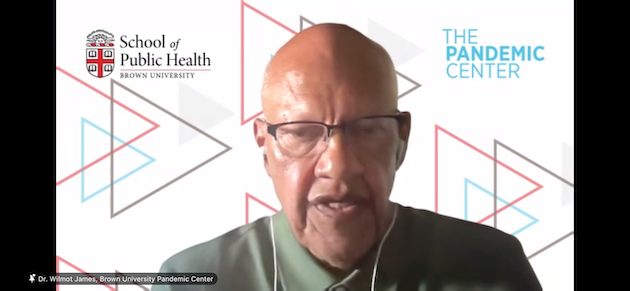
Wilmot James, Senior Adviser, Brown University Pandemic Center. Credit: Busani Bafana/IPS
In June, the Africa CDC warned that the ongoing Ebola outbreak could be the largest ever, underscoring the urgent need for continued investment in health security preparedness.
An outbreak of the Bundibugyo strain of Ebola, declared a Public Health Emergency of International Concern in May 2026, is currently ravaging the Democratic Republic of Congo and spreading to Uganda, with cases confirmed in Kampala. The WHO’s Regional Emergency Director for Africa rates the current response as only a “three or four” out of ten in terms of sufficiency.
“We note that a significant gap in health security funding commitments remains,” Rachel Staley Grant, senior director, Global Biological Policy and Programs, of the Nuclear Threat Initiative, told IPS. “Domestic and international resourcing of pandemic preparedness is an area that countries and global partners need to continue to track—we have recommended the creation of a global pandemic spending tracker to do just this work.
The health experts recommend that African governments accelerate investments in research and preparedness to include biosecurity and biosafety resources and training.
“Capacity without safety and security training is a liability, not an asset,” James emphasised. “It is a moral responsibility we have to use all the resources, all the technology, all the expertise, and all the systems to make it possible to stop outbreaks from turning into pandemics.”
The health experts called on governments to expand investment in emerging surveillance networks for early warning and detection.
“Early detection is the single biggest lever we have for preventing an outbreak from becoming a crisis,” James said.
Furthermore, governments need to build medical and medical countermeasure deployment capabilities to ensure that vaccines and therapeutics manufactured in Africa are delivered to where they are needed and to have people trust them enough to take them.
The experts also recommended that a harmonised Emergency Use Authorisation Framework should be established to expedite the regulatory pathways for medical countermeasures so that life-saving tools are not held up by fragmented approval processes across countries. In addition, countries were urged to formalise inter-country cooperation agreements to combat outbreaks because health threats crossed borders.
Governments should commit to financing pandemic preparedness through domestic resources and global commitments, the experts recommend.
The index charted health preparedness gains against a backdrop of significant international support, a cushion that is now fast disappearing.
African Union member countries have committed to allocating 15% of national budgets to health under the 2001 Abuja Declaration, but most countries have missed this target, indicating difficulties in allocating more funding to the health sector.
“The financial situation of many African governments, not all, is that some are heavily indebted, and there’s very little wiggle room from a fiscal point of view, so this is a heavy duty call on governments to spend more,” James said in response to a question from IPS. “There has to be some kind of fiscal rebalancing to make sure that governments do what they ought to do in terms of saving citizens’ lives.”
Health Sovereignty Still Elusive
The Africa Centres for Disease Control and Prevention (Africa CDC) notes that African countries import over 90% of their health commodities, despite attempts to promote local manufacturing, pooled procurement, and domestic funding for the health sector.
With external health aid to Africa having shrunk by 70% between 2021 and 2025, the Africa CDC launched a continent-wide strategy to radically transform how health systems are financed, putting African resources at the centre of African health.
The Africa CDC noted that the sharp decline in official development assistance, along with a 41% surge in disease outbreaks from 2022 to 2024, overwhelmed already stretched health systems and warned that without urgent reform, Africa risked losing decades of hard-won progress in disease control, maternal care, and epidemic preparedness.
“Africa cannot continue outsourcing its health security,” Jean Kaseya, Director General of the Africa CDC, said at the launch of a new Financing Strategy for Africa in 2025.
“This strategy is not about aid — it’s about ownership. We are building a future where Africa invests in its people, drives its own health agenda, and responds to crises with speed, strength, and self-reliance.”
Development assistance for health has declined from roughly US$80 billion in 2021 to US$39 billion in 2025, according to the Economic Commission for Africa (ECA), which has warned that Africa’s reliance on external financing and imported medical supplies leaves it vulnerable to price shocks and supply disruptions.
Africa spends about US$145 billion annually on health, less than half of which comes from public budgets, forcing families to bear high out‑of‑pocket costs.”
ECA Executive Secretary Claver Gatete has highlighted mobilising domestic revenues through innovative financing tools and developing pharmaceutical and vaccine manufacturing via AfCFTA-enabled regional value chains as priorities for unlocking Africa’s health sovereignty.
As the global attention shifts to the next pandemic, Africa’s progress is a rare bright spot, a reminder that health security is a journey and not a destination
IPS UN Bureau Report


Excerpt:
Against the backdrop of an Ebola disease outbreak, the new Africa Health Security (AHS) Index, released today, reveals significant gaps in critical health infrastructure despite important progress in health security capacity in recent years.