
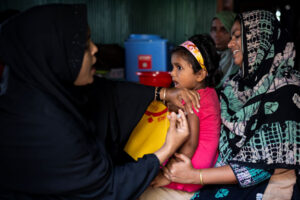
UNITED NATIONS, Jul 22 2026 (IPS) - Despite growing up and working in vastly different geographic regions and environments — one shaped by decades of armed conflict and political instability, and the other by remote, hard-to-reach areas — both Sagal and Johao encounter children daily who have never been vaccinated. Sagal and Johao are members of UNICEF’s Global Youth Health Advisory Group, where they advance children’s health by shaping UNICEF’s strategies, policies, and campaigns, while working directly in their own countries to connect community realities to global conversations about children’s health.
Sagal, 23, lives in the Darul-Salam district in Mogadishu, Somalia, where she works as a junior doctor in maternal and child health. Sagal’s passion lies in promoting vaccine confidence, addressing health misinformation, and empowering the youth to become advocates for healthier communities, she told Inter Press Service. While global vaccine coverage is improving, Sagal describes Somalia’s situation as “still very difficult.” Somalia has one of the lowest vaccination rates due to years of conflict, and while coverage is improving, “not all children are reached equally and a child’s chance to get vaccines depends on where they live, especially in unsafe or hard-to-reach places.”
Johao, 14, lives in Ecuador’s Amazon region, where he has seen firsthand the realities of why children in rural, remote, and isolated areas struggle to get vaccinated. Johao has hands-on volunteer experience in infectious disease research and community health projects and is also a part of U-Report, GeneraciónMÁS, and FixMyFood networks in Ecuador. The biggest challenges Johao encounters when it comes to childhood vaccination campaigns, he told Inter Press Service, are “reaching communities with limited infrastructure, overcoming transportation difficulties, and ensuring that accurate information reaches families before misinformation does.” Both conflict-affected and hard-to-reach areas face their own challenges, but what is particularly difficult in remote communities is “isolation and limited access to essential services.”
The World Health Organization (WHO) defines “zero-dose” children as those who lack access to or are never reached by routine immunization services, which is measured as children who have never received their first dose of diphtheria-tetanus-pertussis (DTP). According to the annual WHO-UNICEF Estimates of National Immunization Coverage (WUENIC), 90 percent of infants globally received at least one dose of a DTP vaccine and 85 percent completed the three-dose series in 2025. However, in 2025, an estimated 13.5 million zero-dose children did not receive a single vaccine in their first year of life, and an estimated 7.3 million infants received their first DTP vaccine but dropped out before receiving their first measles dose. Globally, more than half of all zero-dose children live in fragile, conflict-affected or vulnerable countries (FCV) where immunization programs are affected by political instability, insecurity, and underfunding.
The Immunization Agenda 2030 (IA2030) Mid-Term Review, identified FCVs as “one of the greatest challenges to achieving global immunization goals.” In Somalia, Sagal explained how “most zero dose and dropout children live in places that are unsafe, far away, or completely unreachable. These children face many problems at the same time, including, no vaccines, poor nutrition, very few health services, and almost no social support.”
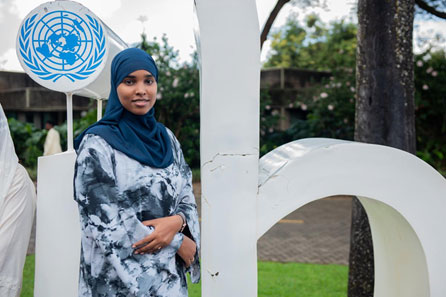
Sagal, 23, a Somalian junior doctor and member of the UNICEF Global Youth Health Advisory Group. Credit: UNICEF
The situation is similar in Ecuador, where Johao explained, “children who have never received vaccines often live in remote rural or Indigenous communities, where transportation is limited and access to health services can be difficult.”
UNICEF Executive Director Catherine Russell emphasized that while vaccination rates have bounced back since dropping during the COVID-19 pandemic, millions of children are still left vulnerable due to displacement, poverty and war.
“We must reach every child, and we must rebuild trust where it is fraying. No child should suffer from a disease that a simple vaccine can prevent,” said Russell.
WHO and UNICEF have identified the urgent need to counter the spread of misleading information and erosion of trust, which has led to a surge in vaccine hesitancy and anti-science sentiment. In particular, IA2030 called for tailored support in FCV settings to “promote nuanced and context-specific advocacy messaging and approaches, and foster trust through sustained community engagement.”
Aside from logistical access, there are other factors that determine people’s decisions to get vaccinations. Sagal shared that in Somalia people forgo vaccinations for a variety of reasons, including fear of vaccine side effects or rumors that vaccines cause infertility. In Ecuador, Johao detailed how some families lack clear information regarding vaccination schedules and have vaccine concerns influenced by misinformation, with these “barriers affecting their trust in and ability to access health services.”
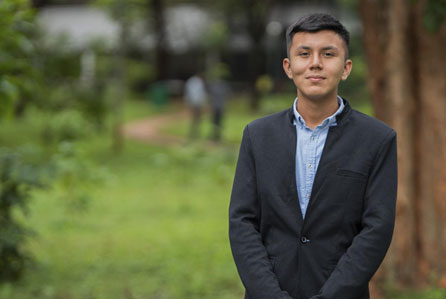
As a member of the UNICEF Global Youth Health Advisory Group, Johao, 14, speaks to the experiences of children in Amazon communities in Ecuador. Credit: UNICEF
In FCV and hard-to-reach settings, mistrust surrounding vaccines is driven by multiple complex and multifaceted aspects, including misinformation campaigns, conspiracy theories, religious opposition, low health literacy, sociodemographic factors, and the politicization of vaccines that undermines science.
Both Sagal and Johao’s work sits at the intersection of access and trust. As members of the UNICEF Global Youth Health Advisory Group, Sagal and Johao are not only bringing vaccines to children who would otherwise be missed, but doing so in contexts where the social and political conditions that make vaccination difficult are the same conditions their communities live with every day.
When it comes to rebuilding trust and reaching children in FCV settings, youth advocates’ “presence and credibility help [them] enter spaces where formal systems cannot,” Sagal said. “Youth advocates speak the same language and come from the same communities, [so] families trust us more than big institutions.” In Somalia, she explained, youth advocates help to rebuild trust in fragile areas by “reaching other young people quickly, communicating in a natural and friendly way, fighting misinformation fast, and mobilizing communities faster than traditional actors.”
Across settings, culture, language, and traditions strongly influence health decisions. Johao noted how “vaccination messages are more effective when they are communicated respectfully and acknowledge local knowledge and beliefs.”
In order to reach the IA2030 goal and ensure vaccines reach everyone, everywhere, at every age, WHO and UNICEF have put forth four concrete actions. These actions include strengthening immunization programs in FCV settings, countering false and misleading health information to support vaccine uptake, increasing and sustaining global funding for immunization programs, and investing in stronger data and disease surveillance systems.
Sagal and Johao’s lived experiences highlight the dire need for these actions. From Sagal’s experiences, zero-dose children “need health and nutrition support delivered in ways that work in fragile and dangerous environments.” As members of the UNICEF Global Youth Health Advisory Group, Johao explained that to effectively help their communities, “we need access to reliable information, training, resources, and opportunities to work closely with health professionals and community leaders.”
IPS UN Bureau Report