

VICTORIA, Seychelles, Aug 3 2026 (IPS) - Earlier this year, I called publicly for a precautionary pause on deep-sea mining, arguing that it is not a rejection of progress, but a commitment to sound science.
I made that appeal because I believed governments meeting this year at the International Seabed Authority (ISA) would finally choose caution over haste. Watching the results emerge from Kingston, Jamaica, over these past weeks, I must admit to real disappointment.
But I want to be equally clear: disappointment is not defeat, and there is still every reason for hope.
The 31st session of the ISA concluded its work in Kingston with the Council ending two weeks of negotiations on 24 July without adopting the long-debated Mining Code. Unresolved issues, ranging from environmental safeguards and liability to inspection, compliance and benefit-sharing, remain exactly that: unresolved.
Governments including France, Costa Rica, South Africa, Mexico, Germany, Palau and Brazil rightly insisted these gaps must be closed before any commercial mining is contemplated. That the Authority could not bridge them after fifteen years of negotiation tells its own story about how far science and governance still lag behind commercial ambition.
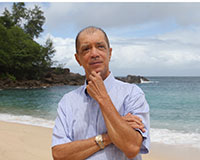
James Alix Michel
That pressure has an external source too. The United States, which is not a party to the Law of the Sea Convention and sits outside the ISA altogether, has continued to advance its own unilateral licensing process for the Clarion-Clipperton Zone, the vast Pacific seabed that holds the largest concentration of exploration contracts on Earth. Five applications are already on record, with reports suggesting more may follow. When a single state can simply step outside a multilateral framework and issue permits for a shared global commons, it does not just threaten the ocean floor; it threatens the very idea that humanity can govern anything collectively. That, to me, is Kingston’s deeper failure: not that a code went unfinished, but that the multilateral system protecting our common heritage was tested, and did not hold as firmly as it should.
And yet.
I have spent much of my life in rooms where the odds seemed stacked against the ocean, and I have learned that setbacks in these negotiations are rarely the last word. There is real cause for hope in what else happened in Kingston.
When four deep-sea mining companies sought observer status at the Assembly, dozens of governments pushed back, and the decision was postponed rather than rushed through. Vanuatu brought forward an agenda item on “Ensuring Adequate Scientific Understanding to Support Informed Decision-Making,” precisely the argument I have been making since earlier this year: that we cannot regulate what we do not yet understand. And crucially, the Council did not simply walk away. It agreed a roadmap for further work, inviting states and observers to submit written proposals on the outstanding issues by 1 October 2026. The door to a properly safeguarded process remains open. It has not been slammed shut.
Most encouraging of all is the growing number of nations refusing to be rushed. When I first raised this call earlier this year, more than 40 countries had already backed a moratorium or precautionary pause. Today that number stands at 45, including seven Pacific nations, alongside outright bans by France and by Palau and New Caledonia within their own waters. They are joined by more than 70 companies, 82 financial institutions representing some €24 trillion in assets, and over 900 scientists from more than 70 countries, all saying the same thing: we do not yet know enough to proceed safely.
This is not an anti-mining movement. It is a pro-science movement. Nobody serious is arguing that the world will never need these minerals, or that the seabed must remain untouched forever. What I am arguing, and what the evidence increasingly supports, is that decisions with potentially irreversible consequences for ecosystems we have barely begun to map should not be made under commercial or geopolitical pressure. Scientists directly observed less than a tenth of the size of Belgium’s worth of deep seafloor before these negotiations began. This year’s IUCN Red List found that 62 percent of molluscs known only from hydrothermal vents are now at risk of extinction, many of them identified within the last decade. We are still discovering what we might destroy, and we are only beginning to understand the deep seabed’s role in storing carbon and regulating ocean chemistry.
I say this as someone who has governed a small island nation whose entire future is tied to the health of its ocean. Seychelles did not treat marine protection and economic progress as opposing forces. Through marine spatial planning protecting thirty percent of our waters, and the world’s first sovereign blue bond, we showed precaution can be financed and delivered without halting development. That experience is precisely why I believe a precautionary pause on deep-sea mining is a down payment on progress, not a brake on it.
Small island developing states cannot afford to gamble with the ocean systems that feed us and anchor our economies. I say this with humility: Seychelles has banned deep-sea mining in its own waters under our Marine Spatial Plan, yet is not among the 45 nations formally backing the international moratorium. That gap between what we protect at home and what we champion abroad is one I hope Seychelles, and others like it, will now close.
So my message to fellow leaders, particularly across Africa and the small island states that depend most on healthy oceans, is this:
Kingston’s disappointment is real, but it is not the end of the story. Forty-five nations have already shown that caution and ambition can coexist. I urge every government that has not yet done so, especially those still weighing their position ahead of the October deadline for written proposals, to add its voice to that growing coalition. This is not about obstructing progress; it is about demanding the evidence that ensures whatever progress we make does no lasting harm to the seabed we all share. I also urge regional bodies, from the African Union to Pacific and Caribbean groupings, to adopt common positions, so no single small state stands alone against powerful commercial interests.
The common heritage of humankind deserves patience as much as ambition. Kingston reminded us how much work remains. It also reminded us how many are still willing to do it.
James Alix Michel is the former President of Seychelles (2004-2016), Founder of the James Michel Foundation and the University of Seychelles, and a global advocate for the blue economy, ocean conservation and climate resilience.
IPS UN Bureau