

PORTLAND, USA, Aug 10 2026 (IPS) - Upon reaching the age of 80, men and women are living longer than ever before.
These gains in longevity among octogenarians represent a remarkable demographic achievement. The additional years of life provide new opportunities for older adults and their families while also presenting important social, economic, and healthcare challenges for societies.
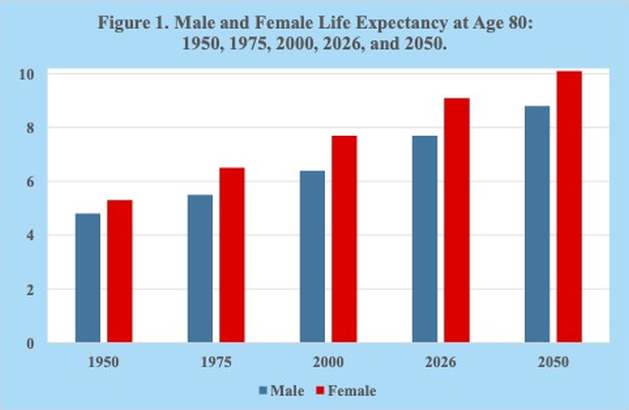
In 1950, the global life expectancy at age 80 was 4.8 additional years for men and 5.3 additional years for women. Over the following decades, these figures increased steadily, reaching an estimated 7.7 years for men and 9.1 years for women in 2026. This upward trend is expected to continue, with life expectancy at age 80 projected to increase to 8.8 additional years for men and 10.1 additional years for women by 2050 (Figure 1).
Source: United Nations.
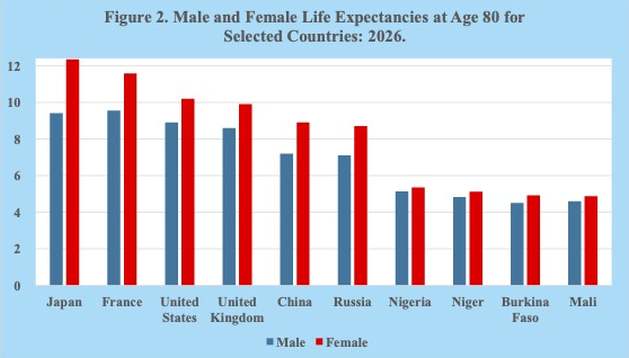
Behind these global averages, however, lies considerable variation among countries. More developed countries, such as Japan and France, have relatively high life expectancy at age 80, with men expected to live an additional 10 years and women approximately 12 years. In contrast, less developed countries, including Nigeria, Niger, and Mali, are at the lower end of the distribution, where both men and women who reach age 80 can expect to live about 5 additional years (Figure 2).
Source: United Nations.
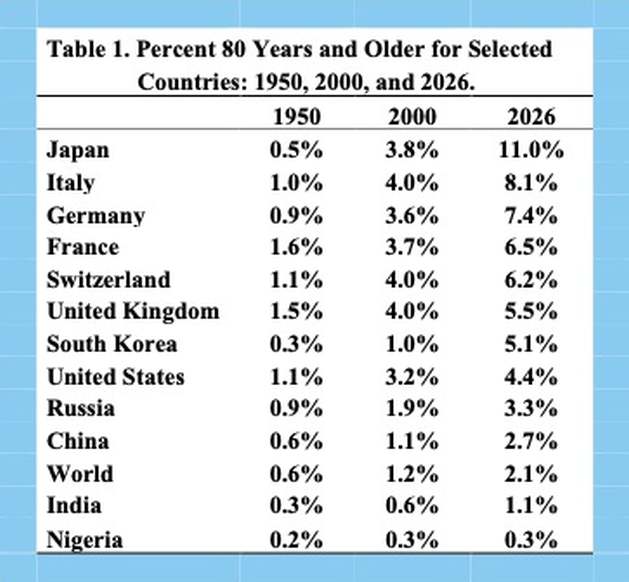
The proportion of the world’s population surviving to age 80 and older has increased steadily over recent decades. In 1950, approximately 0.6% of the global population was 80 years or older. By 2026, that proportion had doubled to 1.2% and is projected to increase further to 2.1% by 2050 (Table 1).
Source: United Nations.
Although octogenarians continue to represent a relatively small share of the world’s population, their numbers and proportions are increasing rapidly, reflecting continued improvements in survival and the ongoing ageing of populations worldwide.
The proportion of octogenarians in a population varies widely across countries. The highest percentages are found in more developed countries, while the lowest are seen in less developed countries. In 2026, for example, 11% of Japan’s population and 8.1% of Italy’s population are aged 80 years and older. In contrast, the corresponding proportions are 1.1% in India and 0.3% in Nigeria.
According to the World Health Organization (WHO), although genetics influence certain aspects of health among people aged 80 years and older, most differences in health outcomes are shaped by physical and social environments, as well as personal characteristics such as sex, ethnicity, and socioeconomic status.
Reaching advanced age in good health depends to a great extent on maintaining healthy habits throughout life. These include eating a balanced diet, engaging in regular physical activity, avoiding tobacco and drug use, limiting alcohol consumption, and maintaining strong social connections.
The growing prevalence of chronic diseases and the increasing demand for long-term care have important implications for governments, healthcare systems, and families. Meeting the needs of a rapidly expanding population of octogenarians will require increased investments in healthcare, long-term care services, and age-friendly communities
Together, these health-promoting behaviors help reduce the risk of chronic diseases, preserve physical and cognitive functioning, and delay the need for long-term care, thereby improving both longevity and quality of life in old age.
However, many people in their 80s face significant challenges, including managing chronic health conditions, accessing long-term care, maintaining financial security, and coping with social isolation.
The proportion of adults aged 80 years or older living alone varies considerably across countries, reflecting differences in cultural norms, family structures, income levels, and public support systems. In many developing countries, fewer than 10% of octogenarians live alone, whereas in high-income countries the corresponding proportion typically ranges from 30% to 50%.
Older adults also frequently experience ageism, with stereotypes portraying them as frail, dependent, or a burden to society. Such attitudes can lead to discrimination and may influence public policies in ways that limit opportunities for healthy and active ageing.
Although some octogenarians remain physically and mentally capable well into their 80s, functioning at levels comparable to people decades younger, most experience some decline in physical and cognitive abilities and live with at least one chronic health condition.
The growing prevalence of chronic diseases and the increasing demand for long-term care have important implications for governments, healthcare systems, and families. Meeting the needs of a rapidly expanding population of octogenarians will require increased investments in healthcare, long-term care services, and age-friendly communities.
At the same time, caring for older adults raises important questions about the appropriate balance of responsibility between governments and families. As populations continue to age, determining how these responsibilities should be shared will become an increasingly important policy challenge.
While governments often expect families to provide the primary care for their ageing relatives, families believe that governments should provide the financial resources, services, and the support needed to meet those care needs. This continuing debate underscores the importance of developing sustainable policies that strike an appropriate balance between public responsibility with family caregiving.
A comprehensive public health response must address the diverse experiences and needs of people aged 80 years and older. Supportive physical and social environments enable octogenarians to continue engaging in activities that are meaningful to them despite age-related declines in physical and cognitive functioning. Such environments include safe and accessible public buildings, age-friendly transportation systems, affordable housing, and community-based health and social care services.
When adults aged 80 years and older are able to spend their later years in good health and within supportive environments, they can maintain independence, participate actively in family and community life, and enjoy a quality of life comparable to that of younger adults. In contrast, when these additional years are marked by physical frailty, cognitive impairment, and mental health challenges, the consequences extend beyond the individual to affect families, healthcare systems, and society as a whole.
Many octogenarians face complex health and lifestyle challenges arising from multiple chronic conditions, functional decline, and age-related impairments.
Globally, many adults aged 80 years and older live with a combination of chronic physical illnesses, cognitive impairment, geriatric syndromes, and psychological changes. These often overlapping and interrelated challenges require coordinated, person-centered health and social care that emphasizes disease prevention, continuity of care, multidisciplinary collaboration, and sustained support for both older adults and their caregivers.
At age 80, the major global health challenges for both men and women include heart disease (such as heart attacks and heart failure), dementia (including Alzheimer’s disease), and geriatric syndromes. These syndromes encompass a range of age-related conditions, including frailty, osteoporosis, hearing and vision impairment, urinary incontinence, and an increased risk of falls.
Falls are among the leading causes of injury, disability, hospitalization, loss of independence, and injury-related death among older adults. Age-related loss of muscle strength and balance, vision impairment, medication side effects, cognitive decline, and neurological disorders all contribute to an elevated risk of falling.
Although many medical conditions affect both sexes, biological differences, lifestyle factors, and women’s longer life expectancy contribute to distinct health profiles for men and women at age 80.
For women, the principal challenges at age 80 often involve maintaining mobility, preventing fractures resulting from osteoporosis and bone fragility, and coping with social isolation. Because women generally outlive men, they are more likely to be widowed, live alone, and experience loneliness, financial insecurity, and the need for long-term support.
In addition, women account for a larger share of dementia cases, including Alzheimer’s disease, owing in part to their greater longevity, making cognitive decline an especially important health concern in advanced age.
Despite these serious challenges, many older adults maintain a positive outlook and a sense of humor. One observation, often attributed to various older speakers, captures that spirit: “People tell you that you’ll lose your mind when you grow older. What they don’t tell you is that you won’t miss it very much.”
For male octogenarians, the leading health risks often include fatal acute cardiovascular events, metabolic diseases, and serious psychological crises. In many populations, men in this age group also experience higher rates of certain cancers and type 2 diabetes than women of the same age. Among the cancers most commonly diagnosed in older men are prostate and bladder cancer.
Although depression is diagnosed more frequently in women, men aged 80 years and older have substantially higher suicide rates. These deaths often occur in the context of bereavement following the loss of a spouse, declining physical health, social isolation, chronic pain, or a diminished sense of identity and purpose associated with major life transitions.
Another important issue facing many people aged 80 years and older is their ability to continue driving. Most countries do not impose a mandatory upper age limit for driving. Instead, they require periodic medical evaluations, vision testing, and more frequent driver’s license renewals to determine whether older adults remain fit to drive safely. These measures seek to balance the independence and mobility that driving provides with the need to protect public safety.
A notable exception to this global practice is Peru, where individuals aged 80 years and older are no longer permitted to renew a driver’s license. The policy was introduced as part of the government’s efforts to reduce traffic accidents, reflecting concerns about age-related declines in vision, hearing, reaction time, cognitive function, and physical mobility.
Reaching the age of 80 and living longer than previous generations is a remarkable demographic achievement. It reflects substantial advances in medicine, public health, nutrition, education, and living standards.
At the same time, increased longevity presents both new opportunities and significant challenges for individuals, families, healthcare systems, and societies.
Meeting those challenges will require policies and programs that promote healthy ageing, support independence, expand access to high-quality health and long-term care, and enhance the quality of life for the growing population of octogenarians.
Many octogenarians worry about losing their independence, developing a chronic illness, becoming a burden to their families, or dying alone. Concerns about the dying process can often be eased when individuals receive compassionate care, remain as comfortable as possible, and have their preferences for medical treatment and end-of-life care respected.
For many octogenarians, however, death gradually becomes less frightening as it draws nearer. Having experienced the loss of spouses, relatives, friends, and contemporaries, many come to view death not as an unfathomable mystery but as a natural and inevitable part of life.
This perspective often fosters a deeper acceptance of mortality. Rather than dwelling on fear, many choose to focus on the present, cherish meaningful relationships, and appreciate the time that remains. For some, this acceptance brings a greater sense of gratitude, purpose and peace as they approach life’s natural conclusion.
Joseph Chamie is a consulting demographer, a former director of the United Nations Population Division, and author of many publications on population issues.