UNITED NATIONS, Aug 14 2026 (IPS) - Pakistan, one of few South Asian countries to oscillate between democratic governments and authoritarian regimes, is cracking down on journalists, including foreign correspondents covering the political situation in the world’s fifth most populous nation, with an estimated population of over 250 million people and ranking behind India, China, the United States, and Indonesia.
According to one report, Pakistan is technically under a nominal civilian coalition government led by Prime Minister Shehbaz Sharif, but political analysts and experts describe the actual state as being under “constitutional militarism” or deep military dominance, with the military establishment holding sweeping authority
The government’s crackdown of journalists has triggered criticisms from the Committee to Protect Journalists (CPJ), Human Rights Watch, Reporters Without Borders and the Pakistan Federal Union of Journalists.
Beh Lih Yih, CPJ’s Asia-Pacific regional director told Inter Press Service (IPS): Pakistan is tarnishing its own international reputation by restricting journalists from reporting from large parts of the country.
“The latest attempt to censor media coverage highlights the deteriorating situation of press freedom in the country, which remains one of the most dangerous places for journalists, with high numbers of media killings and enforced disappearances”.
“Prime Minister Shehbaz Sharif’s government must withdraw the restrictive measures and immediately stop targeting journalists, whether through detention or questioning. Pakistan must uphold its constitutional and international obligations to protect press freedom if it wants to be taken seriously as a democracy.”
According to the New York Times August 10, the government has imposed new restrictions that require all journalists working for foreign news media to seek permission to travel outside Pakistan’s three major cities.
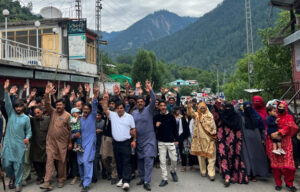
The rules come after a surge of news media, covering elections in the Pakistan-administered part of Kashmir, a disputed region where protesters have been campaigning since early June for more political autonomy.
The Times said reporters in Pakistan have in recent years faced increased censorship and financial pressure, including frozen bank accounts and the suspension of government advertising , forced removal, arbitrary arrests and imprisonment, according to journalists and human rights groups.
In August 2026, UNESCO did not issue a specific statement or direct criticism regarding Pakistan’s latest media restrictions. Instead, a major pushback against Pakistan’s newly enacted Foreign Media Facilitation Guidelines 2026 came from press freedom organizations like the Committee to Protect Journalists (CPJ), the Human Rights Commission of Pakistan (HRCP), and Amnesty International.
Meanwhile, the New York based Committee to Protect Journalists has called on Pakistani authorities to withdraw draconian new guidelines requiring journalists working for international media outlets to obtain authorization before reporting outside Islamabad, Karachi, or Lahore, in a move likely to censor coverage of unrest in Pakistan-administered Kashmir.
The guidelines, reviewed by CPJ, require international and Pakistani journalists who contribute to foreign media organizations, including social media and web-based platforms, to obtain a no-objection certificate (NOC) from the information ministry for “official assignments, especially for work outside Islamabad, Lahore and Karachi.”
“The Foreign Media Facilitation Guidelines open the door for Pakistani authorities to further restrict international media coverage, prevent journalists from reporting freely outside Pakistan’s three main cities, and risk exposing them to administrative retaliation,” said CPJ Afghanistan and Pakistan Representative Waliullah Rahmani. “These guidelines mark yet another appalling blow to press freedom in Pakistan, where journalists are already facing an intense crackdown, particularly those reporting on unrest in Pakistan-administered Kashmir.”
The five-page guidelines were introduced days after the government criticized international reporting on elections and protests in Kashmir and accused Al Jazeera of engaging in “yellow journalism,” a term for sensational reporting. Access to Al Jazeera’s website has been restricted.
Authorities can suspend or revoke journalists’ accreditation or media outlets’ for “acts against the ideology, sovereignty, security or public order of Pakistan,” the guidelines say.
Authorities have banned coverage of protests demanding electoral reform in Kashmir, after international outlets reported on police brutality during clashes with demonstrators, and suspended mobile and internet services. International media say that at least 40 people died ahead of the vote, which began on July 27, according to CPJ.
CPJ said the information ministry did not respond to emailed request for comment.
IPS UN Bureau Report