
Aug 19 2026 (IPS) -
CIVICUS discusses the state of civic and humanitarian action in Gaza with Ibrahim Arandas, a Palestinian activist and project manager at SPARK Gaza, a civil society organisation that provides humanitarian and psychosocial support.
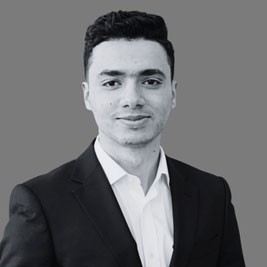
Ibrahim Arandas
What’s life like for people in Gaza now, and what needs are most urgent?
Today, life is defined by scarcity and uncertainty. Israel has turned Gaza into something far worse than a concentration camp. It has engineered a system designed not just to confine and suffocate an entire population, but to erode people’s lives day after day, generation by generation. This is not a simple military operation but deliberate, prolonged destruction, calibrated to keep people alive, but just enough to avoid global outrage while denying every basic condition of human dignity.
The psychological toll is enormous. Aid agencies report that anxiety and severe helplessness have become the norm rather than the exception, particularly among families who have lost their homes, routines and support networks. Our most urgent needs are clean water, healthcare, shelter and mental health support.
What has changed and what obstacles to humanitarian work remain?
When the ceasefire was announced, we thought it meant the end of the war and the suffering. Before the war, two million of us lived across Gaza. We have lost friends and family, and now live in just 36 per cent of the territory.
The hardest issue we face is reaching vulnerable people with the aid they need, including basic supplies, healthcare and mental health support. Patients need healthcare, but our teams cannot reach them. Israel makes movement between areas extremely hard, particularly during periods of escalation, when near-constant closures and limited crossings determine who enters and leaves Gaza.
This is a high-risk, complex environment and we have to stay adaptive to reach the sites and people who depend on us. Every movement implies high risk, but there’s no risk register.
How has your organisation’s work evolved?
We have grown. Gaza has lived through many wars, but we’d never faced conditions like these. In Gaza, you can’t plan a month or two ahead. Things collapse, and the plan has to be redesigned every day.
In our European Union-funded project, we had to constantly redesign how we deliver programming, shifting activities and timelines and sometimes moving sessions online, because access to project sites and young people can change from week to week depending on movement restrictions and security conditions.
We work under constant uncertainty, with internet and network cut-offs overnight and contact with front-line workers lost within an hour. From this, we learned and adapted existing global standards to our context. I developed and published a framework I call ‘adaptive conflict project management’, useful for working in conflict-affected areas like Gaza. It sets out how to build a risk plan, delegate to frontline workers rather than only leaders, divide projects across areas because movement is restricted and keep every worker feeling safe and supported.
How has civil society sustained the response and what support does it need?
Coordination has been essential. One of our few sources of resilience is local organising, combined with international partners who bring resources and access to global platforms like CIVICUS. The combination of local knowledge and international backing has kept civic and humanitarian work alive under the most difficult conditions.
As a frontline worker, what I believe is most needed is sustained access. It’s not just about the volume of aid, but about the ability to plan around consistent access to people and areas. We also need investment in local capacity, not only emergency relief, so Gaza’s civil society can lead the recovery rather than only respond to the crisis. We want to lead this recovery and think beyond emergency relief.
CIVICUS interviews a wide range of civil society activists, experts and leaders to gather diverse perspectives on civil society action and current issues for publication on its CIVICUS Lens platform. The views expressed in interviews are the interviewees’ and do not necessarily reflect those of CIVICUS. Publication does not imply endorsement of interviewees or the organisations they represent.
GET IN TOUCH
Website
Facebook
Instagram
Ibrahim Arandas/Facebook
Ibrahim Arandas/Instagram
Ibrahim Arandas/LinkedIn
SEE ALSO
Gaza: ceasefire an illusion CIVICUS Lens | Article 15.Mar.2026
Gaza: ‘Humanitarian aid matters for survival, but its dynamics diminish Palestinian agency’ CIVICUS Lens | Interview with Ali Abdel-Wahab 16.Feb.2026
‘Life in Gaza’s shelters is marked by deprivation – but also by the endurance of human dignity’ CIVICUS Lens | Anonymous interview 12.Aug.2025