
UNITED NATIONS, Aug 21 2026 (IPS) - As the global HIV response shifts toward sustainable, nationally led, and rights-based care, a new UNAIDS framework published this week argues that integration must start with a country’s readiness.
The report — Operationalizing HIV Integration —published on August 17th, introduces the concept of “protective verticality”, which recognizes that countries begin integrating HIV care at different starting points; therefore, integration should begin according to a country’s readiness, epidemiological patterns, financing realities, and health system capacity.
The report paid particular attention to how in active conflict, fragile settings and outbreak zones, countries need to focus on the deliberate preservation of dedicated and stand-alone HIV infrastructure. “Protective verticality” comes into play because integrating this type of care into national health systems can be dangerous when these systems are themselves on the brink of collapse. The core principle is not a “rapid merger of HIV functions into weak or unstable platforms, but protection of essential services while progressively strengthening the systems, partnerships, financing arrangements and safeguards needed for integration,” the report stated. The focus is on protecting before integrating.
To accomplish this, the report put forth a three-phase approach to show that countries should only move forward in integrating HIV care once they have met the minimum safeguards and proven the health systems’ readiness:
1. ‘Stabilization’; to protect HIV service continuity,2. ‘Connection”; to strengthen health care and community relationships,
3. ‘Embed’; to align HIV functions with national planning integration when ready.
The focus on HIV integration comes at a time of one of the largest reductions to international funding in decades. In July, UNAIDS reported that international HIV financing fell 18 percent in 2025, from USD 8.8 billion in 2024 to USD 7.3 billion in 2025, marking the lowest level of funding in over two decades.
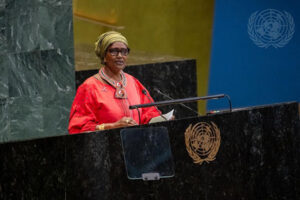
“The era of relying on international aid is over,” said Winnie Byanyima, Executive Director of UNAIDS.
In 2025, 1.2 million people became infected with HIV, and 570,000 people died of AIDS-related illnesses. The reduction in international funding combined with the already fragile HIV response is exactly what the Operationalizing HIV Integration framework is designed to navigate.
The HIV and Ebola crisis across the eastern Democratic Republic of the Congo (DRC) showcases the importance of this framework. In May, as the Ebola outbreak surged across the Ituri, North Kivu and South Kivu provinces, UNAIDS reported that fear of Ebola exposure in health facilities drove some people living with HIV to avoid community antiretroviral therapy distribution points and miss clinic appointments.
In response, UNAIDS helped integrate HIV protections directly into the DRC’s National Ebola Preparedness and Response Plan. UNAIDS also supported the development of an HIV Mitigation Plan to support the continuity of treatment across the affected regions and protect people living with HIV. These actions highlight a real-world example of the “stabilize” and “connect” phases the Operationalizing HIV Integration framework covers.
Sudan illustrates a longer-running version of the same crisis. When war broke out in April 2023, medical supply chains were cut off, and 75 percent of hospitals in conflict areas closed down, disrupting HIV treatment for thousands of people. In January, more than 1,000 days into the conflict, the UN Development Programme (UNDP) reported on its work with the Global Fund and the National Medical Supply Fund to maintain HIV treatment for patients in hard-to-reach settings. The response included setting up mobile primary health facilities to provide HIV testing and establishing cross-border access routes to deliver HIV medicines into Darfur. Due to the years of conflict, displacement, and medical supplies and personnel shortages, Sudan’s health system remains severely damaged. The conditions across Sudan highlight the importance of “protective verticality,” as any rapid and uniform integration of HIV care into the national health system remains difficult without Sudan’s readiness.
These cases highlight why the Operationalizing HIV Integration framework does not treat integration as a global uniform model. Dismantling HIV infrastructure in settings where health systems are actively under siege for integration purposes risks reversing fragile HIV progress. Sustainability and protection need to be examined, as the report argued integration should not be seen as the automatic absorption of all HIV services or systems into broader platforms. Strategic system transformation is needed.
IPS UN Bureau Report