
FAYZABAD, Afghanistan, Aug 21 2026 (IPS) - Afghanistan has seen a number of unexplained murders in recent months.
One of the latest victims is Lailuma, the wife of well-known local singer Salam Maftoon and a community activist.
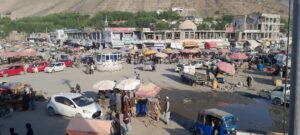
The murder took place in Ishkashim district, in the northeastern province of Badakhshan, Afghanistan, in early May. Lailuma was arriving at her restaurant when unidentified assailants shot her in a market area near the provincial government buildings.
Locals say there were several witnesses to the incident and that the attackers fled the scene immediately after the shooting. People rushed to help Lailuma, who was seriously injured, but she died before reaching the hospital. She was 35 years old.
The attackers have not yet been identified, and the motive for the murder is not officially known.
Lailuma’s senseless murder left many women in a state of terror and deep grief, locals say. Women who previously worked in tailoring workshops or at food stalls selling traditional bolani bread have now stopped working, fearing Lailuma’s fate
Lailuma is not the only victim. In May, the online media outlet Rawa News reported on several recent murders across the country. Among the victims was well-known tribal leader Hajiullah Nazar, who was shot.
According to the human rights organization Rawadar, at least, 611 people were killed or injured in targeted attacks, summary executions or other similar incidents in Afghanistan last year. This is more than 40 percent more than the previous year.
The majority of the victims were men. Among them were former government employees, people allegedly linked to the opposition, protesters, tribal leaders and other prominent figures in the community.
Targeted killings are particularly worrying in remote provinces, where the authorities’ capacity to provide security is limited, Rawa News reports. For example, Lailuma’s home province of Badakhshan has been plagued by clashes between various armed groups.
Lailuma opened a women-only restaurant and tailoring workshop in the city after the Taliban closed schools and universities to girls.
Her goal was to provide girls and women, as well as herself, with employment opportunities amid the difficult conditions in Afghanistan. At the same time, she sought to protect them from forced marriages.
Seven women worked in the restaurant and 11 girls in the tailoring workshop. The girls also received training for their work.
Lailuma also supported her family with her work, as restrictions on performing music had taken away her musician husband’s income. He has not been able to perform in concerts or festivals due to the restrictions imposed by the Taliban regime.
“I remember well how my wife worked in her restaurant together with other women and how active the girls in the tailoring workshop were. She was very enthusiastic about her work and emphasized to her colleagues that you should never lose hope,” Maftoon says.
He doesn’t understand what his wife’s “crime” was that she had to die for it.
Fatima (name changed), a 45-year-old close relative of Lailuma, says that it was the first restaurant in her village. Most residents in the area had never seen a restaurant for women only before.
“Women could go to a restaurant and eat together. It made us happy.”
Fatima can’t understand why Lailuma had to be killed.
Lailuma had already received several anonymous death threats, but she ignored them. She would often say that one day she would be able to help the women of her own village overcome their difficulties. Instead, she herself became a victim.
Lailuma’s senseless murder left many women in a state of terror and deep grief, locals say. Women who previously worked in tailoring workshops or at food stalls selling traditional bolani bread have now stopped working, fearing Lailuma’s fate.
Many of them do not even dare to attend funerals or wedding ceremonies. Recently, fewer and fewer women have been seen in the village center or at the local market.
“I don’t think any of the girls in this village dare to go to work or be active in any way. They don’t even dare to leave their homes,” says one villager.
Rahima (name changed), who also worked at Lailuma’s restaurant, says that after that day she has not dared to work again.
“That day they killed Lailuma. On another day it could be someone else from our restaurant.”
Nadia (name changed), a women’s rights activist, says that Afghan women are currently not safe even in the few jobs they still have. Most of the work available to them is related to small-scale private entrepreneurship, such as tailoring, handicrafts or, alternatively, working in a restaurant.
“Mysterious murders like this make women give up hope of getting a job or maintaining social relationships. Even life itself can seem meaningless.”
She hopes that the international community and human rights organizations will be more active in highlighting the violence and oppression experienced by Afghan women, which is present everywhere, both inside and outside the home.
Excerpt:
The author is an Afghanistan-based female journalist, trained with Finnish support before the Taliban take-over. Her identity is withheld for security reasons