
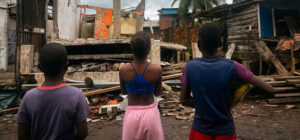
UNITED NATIONS, Aug 25 2026 (IPS) - Over the past week, the humanitarian crisis in Colombia has deteriorated significantly following the Mw 7.4–7.5 earthquake that struck the Chocó department on August 10. With the Colombian government declaring a State of Emergency across 15 departments, the nation continues to struggle with massive civilian casualties, immense damage to critical infrastructure, and the disruption of basic services. The national government and the humanitarian community continue to coordinate lifesaving responses and monitor conditions as they evolve.
The latest figures from the International Federation of the Red Cross and Red Crescent Societies (IFRC) show that the earthquake and the following aftershocks affected the majority of Colombia’s municipalities, including both densely populated urban environments and rural areas. The Office for the Coordination of Humanitarian Affairs (OCHA) and El Equipo Humanitario País Colombia (EHP) estimate that roughly 282,700 people have been affected across 15 of the 32 departments, or roughly 153,300 households. As of August 24, there have been at least 329 fatalities.
Additionally, 4,548 people have been injured, 426 remain missing, and 356 have been rescued. IFRC has recorded over 134,342 damaged homes, while OCHA and EHP estimate that at least 31,400 homes have been completely destroyed. The earthquakes have decimated critical infrastructure in Colombia, with authorities reporting significant damage to educational facilities, health centers, water systems, and community spaces.
At least 3,443 educational facilities have been affected by the earthquake, with an additional 263 having partially or completely collapsed or projected to collapse imminently. Roughly 75,000 students have been stripped of access to safe education as a result. Furthermore, around 3,905 community centers have been impacted, significantly elevating the risks of psychosocial and developmental challenges for affected communities.
Local authorities have also underscored numerous disruptions to electricity, water supply, healthcare, and telecommunications over the several days, resulting in delays in comprehensive damage and needs assessments, while rendering numerous municipalities outside of humanitarian reach. According to IFRC, at least 413 roads have been damaged and five airports have been impacted.
“There’s communities that haven’t been accessed yet or have only been accessed once,” said Jean Philippe Antolin, the International Organization for Migration’s (IOM) Humanitarian Response and Recovery Specialist for Latin America and the Caribbean during a press briefing at the UN Headquarters on August 20.
“We must continue to provide blanket coverage of several items from shelter to food to health. Among those many most pressing urgent needs, I will say also the need for information. People need to know. People need to know whether the house is safe, structurally sound. From outside, some might not look affected, but if you go inside, you will see cracks everywhere. People are sleeping outside for fear of the roof collapsing over their heads.”
Entire communities are on the brink of collapse as delayed humanitarian responses continue to be exacerbated by pre-existing inequalities and vulnerabilities. Prior to the earthquake, roughly 7 million people in Colombia had been experiencing moderate to severe levels of food insecurity. The World Food Programme (WFP) notes that since the earthquake, approximately one-third of the population in Chocó and Valle del Cauca, two of the hardest-hit regions, are critically food insecure.
Additionally, widespread displacement and the disruption of community support networks have significantly amplified protection risks, with thousands of families across Colombia residing in overcrowded and unsanitary displacement shelters. The latest figures from the United Nations Population Fund (UNFPA) show that women and girls residing in these shelters are at a heightened risk of gender-based violence, while pregnant women have limited access to lifesaving maternal healthcare including antenatal care, emergency obstetric services, and effective referral mechanisms.
Communities in overcrowded displacement shelters are especially vulnerable to vector-borne diseases as heavy rains across Pereira, Buenaventura and Quibdó worsen living conditions. Antolin warned that the rise of dengue is of particular concern, with water contamination further increasing the risk of diarrheal and respiratory illnesses.
Furthermore, the Food and Agriculture Organization (FAO) stresses that the full impact on rural communities remains unclear, noting a “critical information gap” regarding damage to crop harvests, livestock, irrigation systems, and artisanal fishing. Because the systems are lifelines for riverine, rural, and coastal communities, the disruption risks breaking production cycles and leaving families with far fewer resources for the next season.
“Humanitarian partners say more housing options, including community shelters, temporary hotel stays, host families and rent support are needed for families whose homes were destroyed, badly damaged or no longer safe,” said Antolin. “Repair kits and household basics such as sleeping mats, bedding, cooking supplies and items for privacy will be essential to help people live safely and with dignity. Getting these supplies to the hardest-to-reach areas remains a major challenge. and most partners are working together to overcome it. There is also an urgent need to strengthen roofing, drainage and waterproofing in existing locations while continuing to register affected populations, whether in collective sites with host families or rental housing.”
In the wake of the earthquake in Colombia, the United Nations and its partners have been on the frontlines providing direct support to affected communities, including healthcare, protection services, and food and cash assistance. IOM has launched a USD 30 million USD appeal focusing on providing shelter, water and sanitation (WASH) services, and protection services, alongside investments in community recovery and risk communication.
WFP is positioned to expand its current distribution of food assistance from Pereira and Quibdó to other critically vulnerable localities, aiming to reach approximately 100,000 civilians. Meanwhile, UNFPA has been deploying humanitarian personnel in Chocó to provide support for survivors of gender-based violence and pregnant women, while also providing hygiene and maternal supplies. Concurrently, the United Nations Children’s Fund (UNICEF) is collaborating with national authorities to expand child protection systems.
IPS UN Bureau Report