
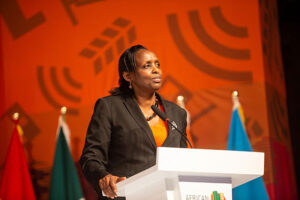
NAIROBI, Kenya, Sep 24 2026 (IPS) - I was born in Rwanda, but my family soon became refugees in Uganda during the conflict and unrest on the cusp of independence. My father was a teacher and went to great lengths to make sure I was well educated. My parents were also smallholder farmers, and I saw firsthand the challenges my parents and other refugee families faced.
After I received my doctoral degree from the University of Massachusetts at Amherst, I returned to a new Rwanda in 2005, managing a World Bank agriculture project with the government. In 2008, I became Minister of Agriculture and Animal Resources, and over the next six years, I oversaw the country’s transition from food deficit to food security, as Rwanda cut its global hunger index by more than 50 percent. We implemented what we understood to be true: effective deliberate agricultural investment drives poverty down.
Agricultural growth is up to four times more effective at reducing poverty than growth in other sectors, and it underpins food security besides. Yet despite that evidence, Africa’s agriculture sector faces an estimated $200 billion annual financing gap.
Less than a year ago, I joined the Global Agriculture and Food Security Program (GAFSP) as Co-Chair of the Steering Committee because I have seen firsthand how GAFSP is a collaborative platform that connects governments, farmers, civil society and leverages the private sector and multiple partners to tackle food insecurity. Among its inaugural investments was a 60 million dollar investment in Rwanda’s Land Husbandry and terracing program which allowed farmers to reclaim degraded land by mobilizing more than 10 times this initial capital, reached hundreds of farmers and contributed to land restoration, food security and poverty reduction all at the same time.
GAFSP’s Business Investment Financing Track (BIFT) has made its second allocation (its first allocation was to the African Development Bank). Announced at the Africa Food Systems Forum “Investing in Africa’s Agri-Food Systems: Nourishing Nations, Growing Jobs, Building Resilience,” Rwanda’s BIFT allocation is a concrete step toward the GAFSP vision that sharing risk deliberately, and cooperatively, rather than leaving it with farmers alone, moves capital that reduces food insecurity. This $6 million allocation has already unlocked $15 million more from IFAD, the Bank of Kigali and Aceli Africa – 2.5 times GAFSP’s own contribution – reaching an expected 215 farmers’ organizations and 35,000 smallholders.
What is most encouraging about this funding is the paradigm shift it represents against the challenging context of reduced Overseas Development Assistance. Capital structured to absorb risk can shift lender considerations to bring private finance into a domain the private sector has avoided, catalyzing transformational change for smallholder borrowers.
The central obstacle isn’t capital or conviction – it’s risk. Agricultural lending is constrained by the risk of accelerating climate shocks and by the practical cost of financing smaller loans. Roughly 90 percent of staple food production in Sub-Saharan Africa depends on rain-fed agriculture, leaving households with no buffer when a season fails. Farmers in low-income countries bear the highest burden of worsening weather conditions, while African countries lose the most GDP to escalating natural disasters, from drought to surging storms. Finally, the loans these farmers need are relatively small, and small loans cost lenders more to appraise and administer.
As Rwanda’s Agriculture Minister, coordinating across ministries to run programs like the Land husbandry program mentioned above alongside the One Cow per Poor Family – a critical source of nutrition for poor families taught me that risk-sharing across government agencies, communities and financiers is what makes ambitious programs work.
It is now a question of scale. What worked for smallholders in Rwanda can work for millions more, if development finance institutions and private lenders treat risk-sharing as standard practice. I have spent my career watching farmers do more with less. Give them the finance they’ve earned, and there is no question they will transform the food system to be more efficient, resilient and a stronger driver of prosperity at scale.
IPS UN Bureau