
MEXICO CITY, Nov 3 2026 (IPS) - At first glance, a data centre in Mexico draws little attention, as it is usually housed in an industrial park, out of public view. But, in addition to emitting greenhouse gases such as carbon dioxide (CO2) and nitrogen oxides, its cooling and fire suppression systems contain substances with strong environmental and health impacts: the so-called “forever chemicals”.
IPS found that at least five data centres operating in Mexico use hydrofluorocarbons (HFCs), a group of synthetic gases with a global warming potential up to 7,000 times higher than that of CO2, the human-induced gas responsible for global warming. These gases also have an atmospheric lifetime of 15 years, according to data from ATMOsphere, an independent global accelerator for the air conditioning market.
Mexico hosts at least 144 data centres run by 44 providers in 69 cities, but most of the companies do not disclose whether their cooling and fire suppression systems use forever chemicals
Research published by U.S. government institutions has concluded that these gases accumulate in air, water and soil, and can be absorbed by animals and plants through ingestion or contact. They are also highly mobile, to the point of being present in the Arctic and the Himalayas, according to a 2023 study.
Forever chemicals, also known as per- and polyfluoroalkyl substances (PFAS), are a large family of over 15,000 synthetic chemicals. They are needed to cool the hundreds of servers housed in data centres, which is key to prevent overheating and interruptions to their operations. However, the extent of their use in Mexico is unknown.
Mexico hosts at least 144 data centres run by 44 providers in 69 cities, but most of the companies do not disclose whether their cooling and fire suppression systems use forever chemicals.
Although Mexico is a party to the Stockholm Convention on Persistent Organic Pollutants, an international agreement that entered into force in 2004 and aims to eliminate and restrict the production and use of dangerous chemicals, these substances are not regulated under national law, there is no inventory of contaminated sites and there is no systematic monitoring.
Teresa Roldán, member of the environmental advocacy group Vocer@s de la Madre Tierra in Querétaro, Mexico’s data centre hub in central Mexico, denounces the lack of oversight by the authorities and of transparency by the companies.
“Since they (the data centres) arrived, there has been no clear information, and as a result (the government) has let them operate without any supervision. We know nothing about the chemical substances. (…) They leave us in uncertainty about the substances and the discharges of liquid waste. There is no way they are not contaminating”, she said to IPS.
Roldán and her group have showered state and federal authorities with requests for information on issues such as water use, greenhouse gas emissions and waste management, but the authorities say they do not have the information or refuse to provide it.
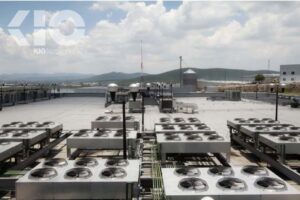
Air conditioning system at the data centre of the U.S.-based company HostDime in the western city of Guadalajara. Credit: HostDime
Most of the data centres operating in the country do not have Environmental Impact Assessments describing the type of cooling and fire suppression systems they use. Only a few companies have made the information available on their websites.
For example, the MEX3 data centre of the Mexican corporation KIO Networks, located in Mexico City, explains the operation of a very early smoke detection apparatus (VESDA) that automatically detects smoke even before it is visible and proceeds to extinguish it. It works with the gaseous hydrofluorocarbon FM-200, also known as HFC-227ea or heptafluoropropane.
The KIO MEX5 data centre, in the municipality of Tultitlán, in the state of Mexico, which borders Mexico City, also says it uses a clean agent suppression system. Most clean agents are hydrofluorocarbons, although the company does not specify which one it uses. The same is true of the KIO MTY1 centre, located in the municipality of San Pedro Garza García, next to Monterrey in the state of Nuevo León, northern Mexico.
Clean agent fire suppression systems are normally used instead of water-based systems because of their non-conductive, residue-free properties, while the latter can damage servers.
Novec, an evaporative fluid, has become the popular choice for high-capacity data centres. The substance boils on contact with electronic components and thus absorbs a large amount of latent heat of vaporisation.
The Mx1 Querétaro facility, owned by U.S.-based Equinix Inc., uses Novec 1230 gas in its fire suppression system, which contains PFAS. The U.S.-based 3M, its manufacturer, has announced the discontinuation of Novec to comply with international regulations to eliminate the use of forever chemicals.
The data centre of the binational NGX Networks in Nogales, in the northern state of Sonora, also uses a refrigerant gas containing forever chemicals.
Various scientific studies have found PFAS at the poles and in the oceans. Multiple studies in the United States and Europe link them to cancers of the kidney, pancreas, testicles, uterus and endometrium, as well as to multiple myeloma. They are also considered endocrine disruptors. Their useful life exceeds 20 years. In the PFAS life cycle, the usage stage is the critical one because of its high emissions to the environment.
Hydrofluorocarbons emerged under the Montreal Protocol, which came into force in 1989, to replace gases containing chlorine and bromine that deplete the ozone layer and to meet growing demand for industrial, commercial and residential refrigeration. But these gases are very powerful climate pollutants, which is why they are the target of global reduction, as happened with the halogens covered by the Montreal Protocol.
The risk of chemical contamination clashes with the Mexican government’s promotion of data centres as part of its drive for industrialisation under the National Strategy for Industrialisation and Shared Prosperity, known as Plan México, a mix of energy, technology, pharmaceutical and even food projects.
It also adds to the centres’ high energy and water consumption in places already suffering water stress, such as Mexico City and Querétaro.
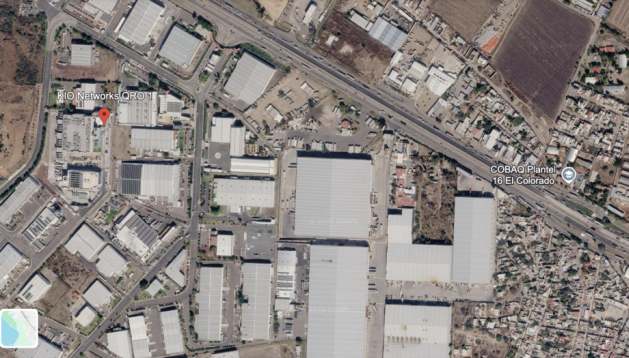
The data centre operated by the Mexican company KIO Networks in the central state of Querétaro is located in a populated area, near homes and schools, where air, soil and water pollution can spread. Credit: KIO
Recent research by Leonard Siegel, the California-based non-governmental organisation Center for Public Environmental Oversight executive director, shows that the data centre industry uses PFAS as an alternative to reduce the use of water, the liquid most commonly used in cooling systems.
Like Roldán in Querétaro, Siegel questions the lack of information on the forever chemicals consumed in data centres in the United States.
“The companies are not sharing the information. And we are now more concerned about the planned ones than the ones under construction”, he said to IPS, citing their size, the scale of their operations and, consequently, the type and quantity of equipment required.
In both Mexico and the United States, data centre companies do not disclose the volume of refrigerant they replace each year, the chemical releases during the normal operation of the centres, or the losses during the installation and maintenance of equipment.
Nor is it clear whether forever chemicals contaminate the wastewater discharged by data centres.
PFAS are used in data centres mainly as refrigerant gases and in immersion cooling fluids. The most common cooling method consists of using PFAS gases in a compressor system, like a refrigerator, to cool air or water for the computers.
The problem grows when the degradation of PFAS leads to the formation of trifluoroacetic acid (TFA), which has appeared in rain, beer, tea and fruit crops, according to a 2024 study by five experts from scientific institutions in Norway, Sweden and Switzerland. TFA alters levels of thyroxine, a thyroid gland hormone that is vital for regulating human metabolism, according to a 2025 study by 11 specialists from Austria.
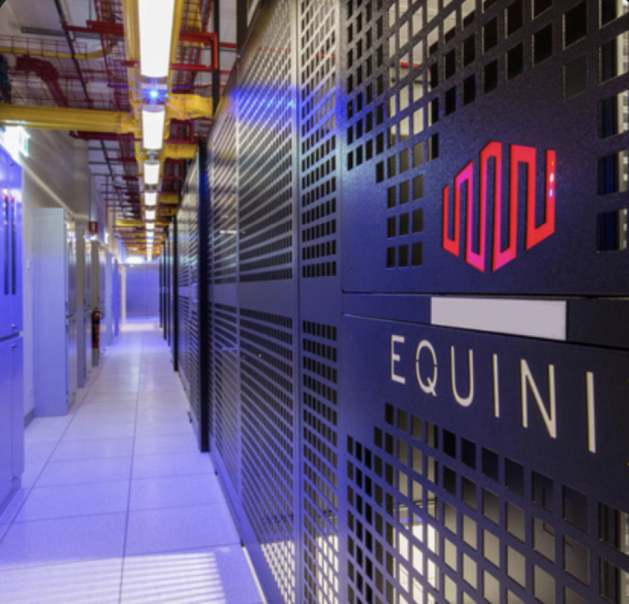
Racks of servers in the data centre of U.S.-based company Equinix in the state of Querétaro, in central Mexico. Credit: Equinix
Traditional data centres use heating, ventilation and air conditioning (HVAC) systems that include a condenser, whose main function is to convert vapour into liquid or release heat to the external environment. Most air conditioners contain forever chemicals. In the HVAC case, these liquids can be recycled or become part of the liquid waste the facility discharges.
A more advanced setup is the computer room air conditioner (CRAC), which regulates temperature, humidity and airflow using a compressor, an evaporator and a condenser, and is designed for small and medium-sized data centres.
Larger facilities operate computer room air handlers (CRAH), using chilled water from a central chiller plant. These require greater investment in infrastructure but are more efficient, which results in long-term savings, as explained by Exposiciones Industriales de México, organiser of the largest air conditioning trade fair in the country.
Historically, data centre chillers and CRAC and CRAH systems have used the refrigerant gas R-134a, which contains PFAS.
Data centres of companies such as Equinix, KIO and Scala use CRAC or CRAH systems, according to their public reports. The facility of the U.S.-based HostDime, planned to operate in Guadalajara, will have an HVAC system.
The density of a data centre relates to the amount of computing capacity installed in a given area. Data centres currently being built to support the development and operation of artificial intelligence systems can concentrate tens of kilowatts in a single structure.
This gives an idea of the volume of heat to be generated and of the forever chemicals or water needed to cool the servers.
For example, Ascenty-01, Microsoft’s data centre, plans a first phase of four data rooms, out of a total of 10, with a total of 2,992 electronic equipment racks, according to the environmental impact assessment obtained by the Latin American Observatory of Data Centers. Each data room, with a capacity of 2 MW, will have 13 CRAH units, 11 in operation and two on standby.
KIO and Ascenty did not respond to the reporter’s request for comment. The Mexican Association of Data Centres initially replied to the reporter but declined to answer the query on the subject. Nor the Ministry of the Environment and Natural Resources answered the question about the lack of PFAS regulation in the country.
According to Noemí Quiroz, senior consultant for non-governmental organisation Centro de Estudios e Investigación en Asuntos Públicos (CEIAP), installing data centres without a regulatory framework to identify their positive and negative consequences has been a bad idea.
“There is no regulatory framework for environmental issues or for placement, and there is no standardisation of procedures. The states do not have regulation either. International evidence was not considered. The situation now calls for regulation”, she told IPS.
In an upcoming study, CEIAP assessed all the country’s towns to identify the most suitable ones for building data centres, based on the availability of resources such as water, land, labour and security.
It also analysed the digital policy of the country’s 32 states against 79 standards, seven of them on data centres.
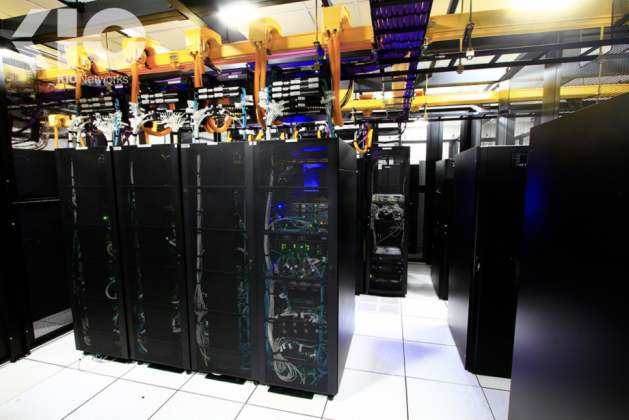
Racks of servers operated by the Mexican company KIO Networks in the central state of Querétaro, which require intensive cooling systems to dissipate the heat generated by the computer equipment. Credit: KIO
In a document submitted to federal authorities, activist Roldán requested a suspension of the operations of all data centres in Querétaro, as well as a moratorium on the approval of new projects, until water, environmental and risk information on substances such as forever chemicals is made public. “What problem are they going to leave us with? We must prevent them before they keep granting more land concessions and electricity”, she warned.
For Siegel, the prospect of facilities with greater computing capacity opens a window to curb further chemical pollution, as he believes that “we are in a situation where we have an opportunity to stop the use of PFAS in cooling before its use begins, but powerful companies are waiting for authorisation for their commercialisation” in the United States.
Specialist Quiroz suggests a national policy that identifies and fills existing regulatory gaps and addresses territorial and energy planning, as well as encouraging the disclosure of information.
“A regulation determined by size (of the facility), with specific criteria and municipal and federal jurisdictions, that establishes comparable indicators for energy, water and resource-use efficiency, through which regulators can learn the characteristics of data centres” she proposed.
While data centres process poisons, answers must emerge from the depths of their powerful systems, as Roldán and Siegel demand: which substances, and in what quantities, they use to cool their computing systems; how much they release into the environment; what they do to prevent these releases; what they do to replace hazardous substances and polluting gases; and whether they will be liable for the environmental damage.
*This investigation was supported by the grant ‘Un Polo a Tierra’ escuela de periodismo para la industrialización verde en México’, sponsored by Periodistas por el Planeta.