
GENEVA, Nov 5 2026 (IPS) - Following my first article with a similar title, I must note that many actors have contributed, and continue to contribute, to the world’s current appalling state and the calamities that may await future generations. When historical injustices committed by colonial powers and their ramifications are ignored; when the drums of war sound in many corners of the world; when international institutions remain powerless; when vulgarity permeates politics and diplomacy; and when heads of state in rich and “poor” countries, along with the leadership of the United Nations (UN), are unable or unwilling to address issues affecting humanity’s destiny, I also declare:
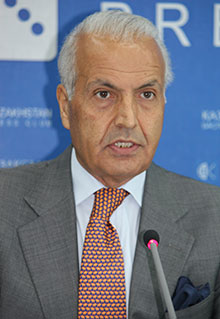
Saber Azam
At the national level, leaders are elected, selected, or imposed with firm claims that they will lead their nations toward a more secure, peaceful, and prosperous future and serve their people with dedication, honesty, and vision. I do not argue here about their accession to power, but rather about their “obligation” to protect their nations’ interests without prejudice toward any constituent group and in concert with other nations, all naturally pursuing similar objectives. Yet bigotry has become a preferred tool and strategy for many leaders seeking to gain or retain power, even in societies considered “democratic.” Moreover, the wealth of a few too often determines the destiny of the many.
Most leaders of countries commonly referred to as “poor or developing” have failed their people. Mired in incompetence, many neglect their duties, serve other interests, and misuse national treasuries to amass personal wealth and property. At the same time, despite possessing enormous natural resources, their populations still lack access to basic social services, their infrastructure lies in ruins, and their economies remain in disarray, requiring support from foreign countries or financial institutions at high interest rates. In contrast, powerful countries appear entrenched in strategies of lip service. The clearest example is so-called “development aid,” often used as a guise to pressure “the needy to submit to the will of the rich.” Like multilateral development initiatives, bilateral aid has produced limited tangible results despite decades of existence and trillions of US dollars spent.
As a standard operating procedure, some states use proxy groups to sow insecurity and to circumvent international law. In both technologically advanced and less developed countries, politics often seems driven by short-term personal or party interests.
International cooperation has lost much of its meaning and substance, becoming “international competition.” While powerful countries may have the military and economic might to pursue this political philosophy, it harms the welfare of less powerful or technologically disadvantaged nations. Honest and sincere cooperation therefore remains elusive. The mighty seek to impose their vision of the world, bullying the less powerful, who often lack the courage to free themselves from dependency and compromise. Many leaders in both groups of countries therefore bear responsibility for the world’s lack of equitable peace, stability, and progress.
I Accuse the UN Leadership
Article 97 of the UN Charter establishes the Secretariat, comprising the Secretary-General and such staff as the Organization may require. Article 99 provides that the “Secretary-General may bring to the attention of the Security Council any matter which in his opinion may threaten the maintenance of international peace and security.” Article 100 further states that “in the performance of their duties, the Secretary-General and the staff shall not seek or receive instructions from any government or from any other authority external to the Organization. They shall refrain from any action which might reflect on their position ….” Article 101 emphasizes that “the paramount consideration in the employment [recruitment] of the staff and in the determination of the conditions of service shall be the necessity of securing the highest standards of efficiency, competence, and integrity.”
When judging the performance of UN Secretaries-General, their senior management teams, and the heads of UN agencies, few have truly met the required standards. This is also a major reason the Organization has failed to fulfill its duties and obligations. Many factors have contributed to UN leadership’s shortcomings in serving humanity. Political and funding pressure from powerful countries seeking to impose their views and preferred candidates—mostly former politicians, ministers, or other prominent figures—for senior UN positions has been a significant obstacle. Such individuals have often proved more loyal to their countries’ policies or political alliances than to the “world-loving” spirit and the principles of impartiality and fairness outlined in the UN Charter. Furthermore, the desire to secure a second term, remain in senior roles for as long as possible, or work in prestigious headquarters such as New York, Geneva, Paris, or Vienna—where political prominence and financial remuneration are most attractive—has left parts of the Organization’s leadership willing to compromise on key principles. As a result, powerful member states have turned such positions into “bargaining chips.” The willingness of some of the most senior UN leaders to yield to external pressure has seriously damaged the Organization’s efficiency and reputation.
The Secretary-General, senior Secretariat officials, and agency heads are expected to uphold international morality and law. They must unequivocally denounce violations of human rights and lawlessness by any state, organization, business, or individual and take decisive action. Leaders who resist political pressure to fulfill their duties have been pushed out. Inefficiency and a lack of accountability are other trademarks of some senior UN managers. In the worst cases, behind-the-scenes deals appear to be the preferred solution because “scandals tarnish the image of the organization.” The internal justice system frequently appears to protect senior managers while being applied more readily to junior staff.
Almost all development agencies, especially the UN Development Program, have failed to meet expectations despite decades of operation and trillions of US dollars spent. Many agencies have overlapping mandates, prompting competition for relevance and funding and leaving them vulnerable to exploitation. No Secretary-General has dared to suggest shutting down some of these agencies, or at least replacing them with more effective bodies and streamlining their mandates. Likewise, reform efforts have amounted to little more than superficial fixes, allowing senior managers to remain in place and the status quo to persist. Therefore, since its inception more than eighty years ago, UN leadership has also played a significant role in the world’s deplorable situation by remaining silent, yielding to external pressure, and accepting unacceptable compromises on crucial issues of peace, security, human rights, and development.
[To be continued]
Saber Azam is a former United Nations official who served at UNHCR and UN-DPKO. He is the author of Soraya: The Other Princess and Hell’s Mouth: A Journey to the Heart of West African Jungles. His third book, Nowhere to Go, will be published soon.
IPS UN Bureau



Excerpt:
This is the second article in a four-part series. The remaining two will follow. I wish to warn distinguished readers that a distorted and unauthorized version of my first article, 'I Accuse', has been posted on the [https://www.thenewyorkernews.com] site.The original version, published by IPS, is available at [https://www.ipsnews.net/2026/11/i-accuse/].