
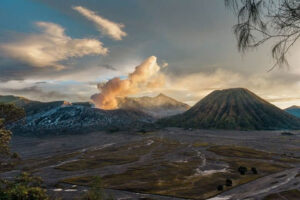
BANGKOK, Thailand, Nov 6 2026 (IPS) - For years, global discussions of disaster risk in the Pacific have been dominated by climate change. Rising seas, intensifying cyclones and coastal erosion have rightly captured international attention. This focus, while warranted, should be complemented by greater recognition of geohazards, which are just as consequential and in many cases, more immediately devastating. Addressing this gap requires a more coordinated approach, supported by sustained investment and stronger partnerships, to foster cooperation and strengthen resilience across the Pacific.
Earthquakes, tsunamis, volcanic eruptions and landslides remain a constant threat across the Pacific. While less frequent than climate-related hazards, their impacts are often sudden, severe and far-reaching. Geophysical hazards account for a significant share of disaster-related deaths and economic losses. ESCAP analysis indicates that approximately 73% of the population and 65% of economic assets in Small Island Developing States (SIDS) in the Pacific are exposed to seismic hazards, which are the second most costly and deadly disaster types in the Asia-Pacific region.
This high level of exposure is fundamentally shaped by geography. The Pacific Islands lie along the Pacific Ring of Fire, a vast zone of tectonic activity encircling the Pacific Ocean, stretching from New Zealand and Indonesia through Japan and the Aleutian Islands to the west coasts of North and South America. The Pacific Ring of Fire accounts for approximately 90% of the world’s earthquakes and about 75% of its active volcanoes. These hazards rarely occur in isolation. An earthquake can trigger a tsunami within minutes; volcanic activity can destabilize slopes and lead to landslides; a single event can cascade across systems and across borders.
Recent disasters highlight both the scale and persistence of this risk across the Pacific. In 2024, an earthquake in Vanuatu left over 80,000 people in need of assistance and damaging critical health, shipping and aviation infrastructure in the capital, Port Vila. The Hunga Tonga–Hunga Haʻapai eruption and tsunami in Tonga in 2022 affected around 84% of the country’s population and caused disaster losses of about US$90.4 million, with the most significant impacts concentrated in infrastructure and the agricultural sector. Overall, landslides were a key contributing factor to fatalities and to the severe isolation and disruption of infrastructure in affected communities. Taken together, these cases highlight a critical point: geophysical hazards have the potential to cause catastrophic, destructive and widespread cascading disruption across Asia-Pacific.
The case for regional geohazard coordination
Despite their undeniable impacts, investment in geohazard systems across the Pacific has not kept pace with the scale of the risk. Efforts to strengthen monitoring, observatories and early warning systems have often been delivered through short-term, project-based initiatives rather than sustained institutional support. As a result, many countries continue to operate with limited technical capacity, incomplete monitoring coverage and systems that are not fully integrated. Momentum is now growing toward a more coordinated approach to geohazards.
At the 2023 UNESCO Regional Geohazards Meeting, experts emphasized that earthquakes, tsunamis, volcanic eruptions and landslides are interconnected hazards that require a unified regional strategy. This was followed by an agreement among Pacific Member States in 2025 to establish a regional body dedicated to geohazards, signaling a clear commitment to strengthening coordination and aligning existing mechanisms.
A key opportunity to operationalize this emerging regional vision lies in the complementary roles of the ESCAP Trust Fund for Tsunami, Disaster and Climate Preparedness and the Pacific Community (SPC). The Trust Fund provides a catalytic financing mechanism to support regional cooperation and strengthen disaster preparedness, aligning well with the aspirations of a regional geohazard coordination mechanism. At the same time, SPC, through its role as the convener of Pacific Disaster Risk Management Ministers, provides an important platform for collective action, enabling geohazard-exposed countries to coordinate priorities, share experience and expertise as well as advancing coherent national and regional approaches.
Together, these complementary roles offer a pathway for translating regional momentum into concrete action by mobilizing and pooling resources, strengthening governance structures, coordination arrangements and sustaining regional cooperation that is responsive to the priorities and needs of countries and territories in the Pacific.
The challenge, therefore, is not a lack of knowledge or political commitment, but the need to translate existing momentum into sustained investment and institutional action. A more balanced approach, one that systematically integrates geohazards into regional resilience efforts, is both necessary and achievable. By strengthening geohazard systems, investing in national and regional capabilities and deepening regional cooperation, the Pacific can move towards a more comprehensive model of disaster resilience, protecting communities not only from rising seas, but also from the powerful forces beneath them.
Daisuke Maruichi, Economic Affairs Officer, ICT and Disaster Risk Reduction Division, ESCAP
Litea Biukoto, Deputy Director, Disaster and Water Resilience Programme, GEM Division, Pacific Community (SPC)
Emilia Gaspoz, Consultant, ICT and Disaster Risk Reduction Division, ESCAP
Temily Baker, Programme Management Officer, UN Office for Disaster Risk Reduction
IPS UN Bureau