
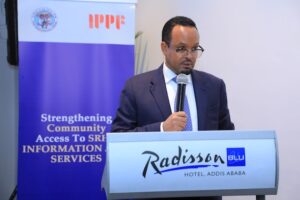
ADDIS ABABA & CAPE TOWN, South Africa, Nov 12 2026 (IPS) - Although Africa and Asia face different demographic challenges, they share a common imperative: ensuring that legislation, policies and budgets translate into tangible improvements in people’s lives.
This was the central message of Dr Abdul-Rashid Hassan Pelpuo, Ghana’s Minister of State for Special Initiatives and President of the African Parliamentary Forum on Population and Development (FPA), in his opening address to the two-day Africa–Asia Parliamentarians’ Conference on Population and Development, held earlier this month in Addis Ababa, Ethiopia.
The conference opened with a moment of silence in honour of former Japanese Prime Minister Fukuda Yasuo, Honorary Chair of the Asian Population and Development Association (APDA), who was remembered for his contributions to international cooperation, particularly in population, development and sexual and reproductive health.
The opening session also featured addresses by Shibata Hironori, Ambassador Extraordinary and Plenipotentiary of Japan to Ethiopia, and an opening statement by Ahmed Shide, Speaker of the House of Peoples’ Representatives, Ethiopia.
A recurring theme was the importance of reliable demographic data to guide policies, budgets and long-term planning.
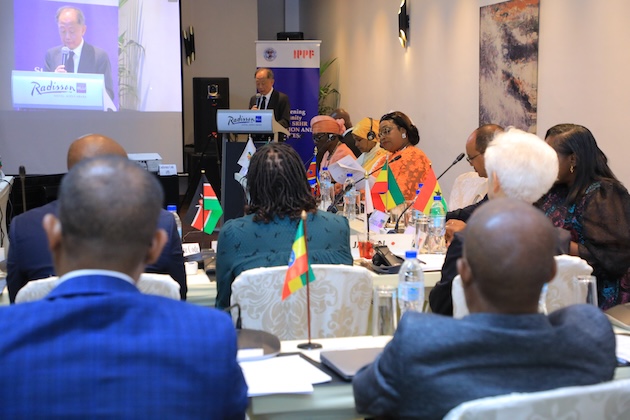
Shibata Hironori, Ambassador Extraordinary and Plenipotentiary of Japan to the Federal Democratic Republic of Ethiopia, said Japan has supported international cooperation and development efforts in Africa and Asia. Credit: APDA
Summing up the conference, Dr Claudia Shilumani, Africa Regional Director of the International Planned Parenthood Federation (IPPF), noted that Africa’s population was expected to grow by one billion by 2050, yet only about half of births were registered. She urged parliamentarians to advocate for modernised data systems, stressing that reliable information and transparent reporting were essential to measuring progress.
But data alone was not enough.
Dr Ikegami Kiyoko, Vice-Chair and Secretary-General of APDA, drew on Japan’s experience of an ageing population to demonstrate the importance of anticipating demographic change.
“Understanding population trends today helps parliamentarians anticipate future needs,” she said.
Her presentation also brought a deeply personal perspective to policymaking. Recounting her mother’s recovery from a stroke, she described how home-based medical care, rehabilitation, nursing and family support had helped her mother regain some independence and remain connected with her family.
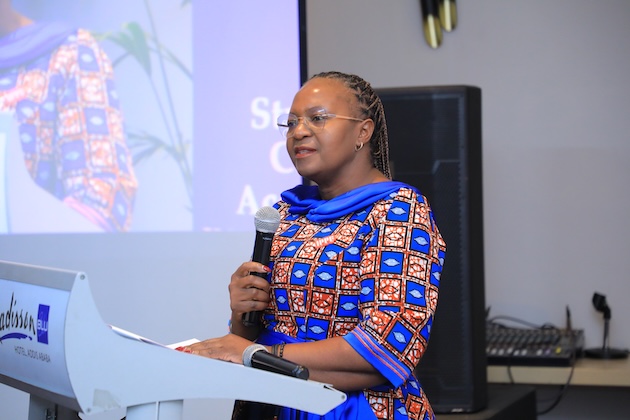
Dr Claudia Shilumani, Africa Regional Director of the International Planned Parenthood Federation (IPPF), succinctly summarised a central message of the African and Asian Parliamentarians’ Meeting: Policy Dialogue on Population, Development, SRHR and Gender Equality, stating that rights need resources and resources need accountability. Credit: APDA
“Policies are ultimately about the people’s lives and dignity,” she said, emphasising that Japan’s goal was not simply to extend life expectancy but to enable people to remain healthy and independent for as long as possible.
The conference also showcased how cooperation between Africa and Asia was translating development commitments into practical interventions.
Mr Koffi Kouame, UNFPA Country Representative, highlighted an initiative involving the Ethiopian Government, UNFPA, Japan, JICA and Japanese private-sector companies to improve menstrual health while creating economic opportunities for women and girls.
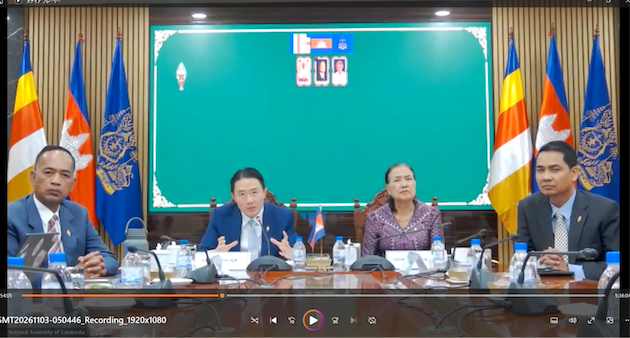
Seng Nhak, an MP from Cambodia, outlined an ambitious programme to equip 1.5 million young people with vocational skills, including free training and financial support for disadvantaged participants at the African and Asian Parliamentarians’ Meeting: Policy Dialogue on Population, Development, SRHR and Gender Equality. Credit: APDA
ITOCHU Corporation provided technical training in producing absorbent sanitary shorts, while JICA, Safaricom and Sumitomo Corporation supported digital solutions, including smartphones and mobile money services that enabled women to purchase materials, manage finances and market their products.
The initiative has trained 485 women in sanitary shorts production and menstrual health management, with nearly 45 000 shorts produced across 17 workspaces in Amhara and Tigray. Approximately 33 000 people received training on reproductive and maternal health, rights and gender-based violence, while 500 women are now producing and selling the products in their communities.
Investing in young people emerged as another critical priority, particularly for Africa, where a rapidly growing youth population presents both opportunities and challenges.
UNFPA’s Jacques Emina noted that Africa’s population could reach 2.5 billion by 2050, with approximately 60% under the age of 25. He warned that youth unemployment and the mismatch between education and labour-market needs could undermine the continent’s prospects of harnessing a demographic dividend.
Drawing on South Korea’s experience, Young Hong, Deputy Regional Director, UNFPA ESARO, emphasised that building human capital required sustained investment over decades, rather than short-term projects. She highlighted how long-term investment in education, voluntary family planning and primary healthcare had contributed to the country’s economic transformation and helped break cycles of intergenerational poverty.
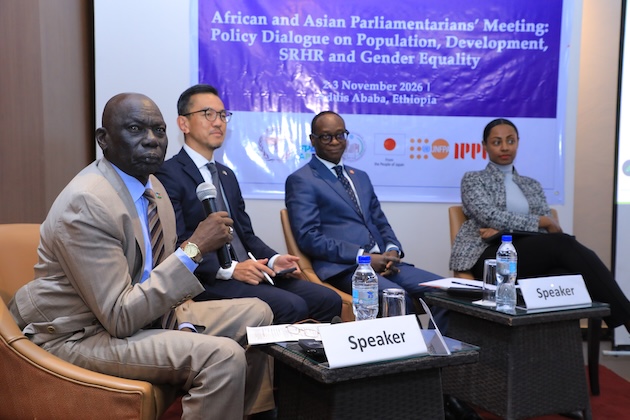
Yakushi Hiroyuki, Chief Representative, JICA Ethiopia Office, and Koffi Kouame, Country Representative of UNFPA, gave delegates at the African and Asian Parliamentarians’ Meeting: Policy Dialogue on Population, Development, SRHR and Gender Equality examples of pilot projects that benefit youth and women. Credit: APDA
Presentations from Ethiopia and Cambodia demonstrated how countries were working to equip young people with marketable skills.
Safaricom Ethiopia Foundation’s Bethlehem Tameru reported that more than 1 000 young people had completed foundational digital-skills training and over 1 700 had completed advanced training.
However, she stressed that success should be measured not simply by the number of people trained but by whether they secured employment, started businesses or improved their livelihoods.
“Training should not be the end of the intervention. It should be the beginning of the pathway.”
Seng Nhak, Cambodia’s MP, outlined an ambitious programme to equip 1.5 million young people with vocational skills, including free training and financial support for disadvantaged participants. He reported that 80% of graduates found employment in the companies where they had trained within six months, illustrating the importance of linking skills development directly to labour-market opportunities.
Across the presentations, a common message emerged: demographic change can create opportunities, but realising them requires sustained investment, effective partnerships and policies informed by reliable evidence.
Ultimately, as delegates repeatedly emphasised, the success of these commitments will be measured not by the promises made at international conferences but by the improvements they bring to people’s lives.
Note: The Policy Dialogue on Population, Development, SRHR and Gender Equality was organised by the Asian Population and Development Association (APDA) in collaboration with the African Parliamentary Forum on Population and Development (FPA). It was hosted by the House of Peoples’ Representatives of the Federal Democratic Republic of Ethiopia. The UNFPA East and Southern Africa Regional Office (ESARO), the Japan Trust Fund (JTF) and the International Planned Parenthood Federation (IPPF) supported the meeting.
IPS UN Bureau Report