
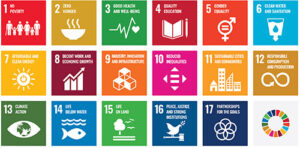
BERLIN / MUNICH, Nov 27 2026 (IPS) - The global landscape has changed profoundly since the adoption of the 2030 Agenda in 2015. Rising geopolitical tensions, galloping military expenditures, accelerating technological transformation—including the omnipresence of artificial intelligence (AI) —and mounting pressures on development financing are reshaping national and international priorities. These shifts raise fundamental questions about the relevance, ambition and accountability of the global development agenda beyond 2030, and even its feasibility.
Armed conflicts and geopolitical fragmentation are reshaping international cooperation. Combined with debt distress and declining development assistance, fiscal space for social expenditures is crushed. Artificial intelligence and digital technologies offer gains in productivity and access to knowledge, but also increase risks of exclusion, intrusive surveillance, discrimination and monopolization of economic power. Climate and environmental disruptions compound these pressures. A credible agenda preparation must confront these tensions explicitly, rather than assume the political and financial conditions of 2015 still prevail.
Catherine Mbengue
That assessment must include the limits of the present accountability model. Under the 2030 Agenda, governments present Voluntary National Reviews (VNRs) to the High-level Political Forum on Sustainable Development (HLPF). These reviews have enabled learning, transparency and stakeholder engagement, but they remain voluntary, state-led and uneven in depth and follow-up. There is no general mechanism requiring states to implement HLPF recommendations or remedy persistent failures. Better indicators alone cannot close that accountability gap.

Gabriele Koehler
The near-universal ratification of the Convention on the Rights of the Child (CRC) illustrates the potential of this approach. Children and future generations bear lasting consequences of multidimensional poverty, conflict and climate disruption, yet have limited influence over policy choices. AI and digital technologies can expand children’s access to learning, information and participation, but also heighten risks of exploitation, discrimination and intrusive data collection. Linking these opportunities and risks to children’s rights under the Convention—and to established treaty review mechanisms—would make intergenerational justice and responsible digital transformation matters of public accountability rather than rhetorical aspiration.
Another example comes from the Convention on the Eradication of all Forms of Discrimination against Women (CEDAW). Women and girls in all their diversity face discrimination in all, and oppression in many, societies. They are confronted with barriers to political, economic, social equality. Since the CEDAW, too, has achieved near-universal ratification, the recommendations from the CEDAW’s committee’s reviews of most countries’ performance are binding, and hence offer a modality to tackle these inequities.
At the ILO, the Indigenous and Tribal Peoples Convention 169 has been ratified by 24 countries, notably several countries with vibrant indigenous communities such as Colombia or Nepal. Its inclusion in an accountability mechanism could support their fight for recognition and rights.
Operationally, a post-2030 framework could map its priorities to existing treaty obligations and UPR recommendations, align national reporting calendars where feasible, and require public implementation plans with measurable milestones, budgets and disaggregated data. Independent national human-rights institutions, parliaments and civil society should be able to scrutinize progress, while international development partners should align financing and technical support with identified gaps. Such arrangements would complement—not abolish—the HLPF’s role in coordinating economic, social and environmental dimensions of sustainable development.
The next agenda will succeed not because it contains a more elegant list of goals, but because it is politically realistic, adequately financed, and has an effective accountabilty framework. The question „beyond 2030“ is therefore not merely what the world community might agree on next. It is how the next global development agenda can translate existing international human-rights obligations into concrete, measurable commitments that respond to emerging global challenges, backed by effective monitoring and accountability.
Selected sources
2030 Agenda and SDGs; UN SDG Report 2026; Voluntary National Reviews; High-level Political Forum; Universal Periodic Review; Human-rights treaty bodies; Convention on the Eradication of all Forms of Discrimination against Women (CEDAW); Convention on the Rights of the Child; Indigenous and Tribals Convention
Catherine Mbengue is an independent international consultant with over four decades of experience in development cooperation, humanitarian action and human rights. A former senior UN official, she advises governments, multilateral organisations and civil society. She is the former President of the UPR Info Board and current member of its General Assembly, and serves on the Board of Directors of ISPCAN and the Board of the Child Law International Alliance. She previously chaired the Executive Committee of the Board of Trustees of the African Child Policy Forum and served on the Executive Committee of Child Rights Connect.
mbenguec@gmail.com
Gabriele Koehler is a former UN staff member (ESCAP, UNCTAD, UNDP, UNICEF) and currently a senior research fellow with UNRISD and a member of various NGOs and NGO coalitions (Women Engage for a Common Future, Global Social Justice, Alliance for a Treaty on Business & Human Rights). She follows the UN80 and other UN processes, and has been writing, advocating and giving talks and academic lectures on the SDGs since long before their inception.
gabrielekoehler@posteo.de
www.gabrielekoehler.net
IPS UN Bureau



Excerpt:
Why the next global framework needs a new political realism and stronger human-rights accountability